By Michael Foli Jackidy
Adidome (V/R), Sept. 25, GNA – The National Youth Authority (NYA), in collaboration with UNICEF, has held an inception and stakeholder meeting at Adidome in the Central Tongu District, to introduce an Adolescent Sexual and Reproductive Health (ASRH) and Youth Engagement Centre (YEC) programme.
Mr Yao Semoade, the Volta Regional Director of the NYA, said the initiative was to create a supportive environment where young people could develop the knowledge, skills and confidence required to make responsible decisions and prepare for adulthood.
He said adolescents were often exposed to peer and societal influences that could lead them into sexual activities that might undermine their future aspirations, making it necessary to provide them with appropriate information, guidance and support.
Mr Semoade said the Youth Engagement Centre (YEC) was a collaboration between the NYA and UNICEF, designed to provide young people with safe spaces where they could freely share their concerns and experiences without fear of judgement.
He explained that through the centres, young people would have access to counselling, guidance, and opportunities to channel their energies into productive activities.
He said the stakeholder engagement was intended to gather relevant information and perspectives from the district to help shape a programme that responded effectively to the needs of young people in the area.
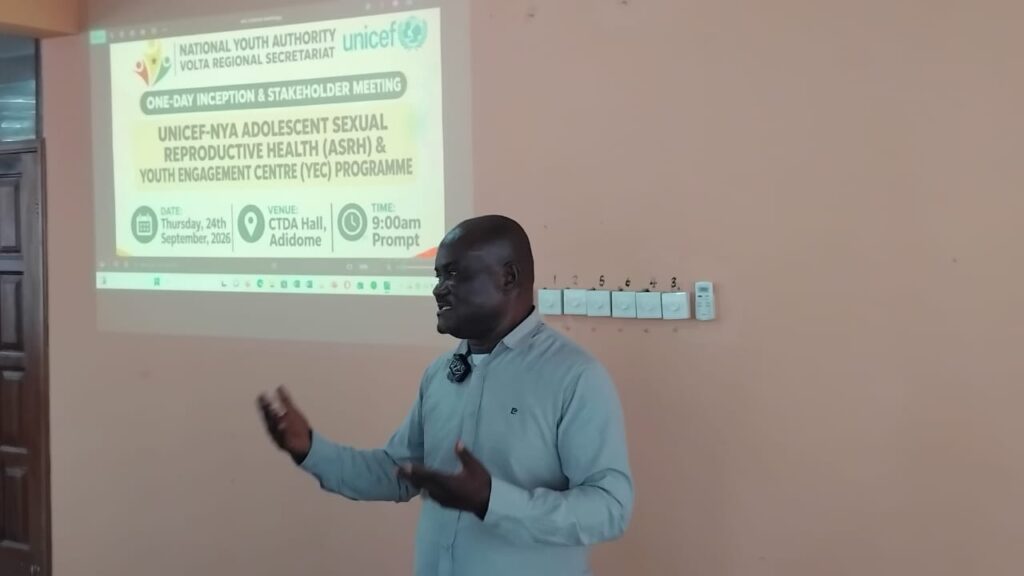
The ASRH programme, which runs from 2026 to 2028, would aside strengthening adolescents’ knowledge, skills and agency, promote youth-informed evidence, policy engagement, and public financial accountability in selected districts.
The programme will equip adolescent girls and boys with gender-transformative life skills and knowledge on sexual and reproductive health and rights, while strengthening youth participation in policy and budget consultations.
Mr Selorm Kwadzo Aklasu-Aho, the Regional Programmes Officer of the NYA, said the action plan would focus on making Youth Engagement Centres ready, safe, accessible and responsive to young people’s needs.
He said the programme would access existing facilities rather than concentrating solely on constructing new centres, with attention to physical infrastructure, digital access, staffing, safety, governance, and partnerships.
Mr Aklasu-Aho said a YEC should be more than a physical building, stressing that its effectiveness would depend on whether young people could access it, feel safe using it, receive appropriate services and trust the system.
He said the initiative would also explore digital options to extend services to young people who lived far from physical centres, faced transportation challenges or preferred accessing information and referrals remotely.
The action plan would involve mapping existing facilities, assessing their readiness, identifying gaps, developing district-level improvement plans, and strengthening youth participation in the design and monitoring of services.
Mr Addison Dodzi Mornyuie, the District Chief Executive for Central Tongu, described the stakeholder engagement as important, saying young people were the future leaders and needed to be meaningfully engaged to protect the continuity of development across generations.
He urged participants to share the knowledge gained from the meeting with their respective communities and groups, including the Muslim community, Okada riders and youth organisations, to broaden the impact of the programme.
Ms Melody Enam Bedi, the Public Health Officer of the Ghana Health Service in Central Tongu, welcomed the initiative and said it would help adolescents acquire knowledge to make informed decisions about their sexual and reproductive health.
She said the district had recorded concerns regarding adolescent pregnancy and sexually transmitted infections, making education, counselling, screening and access to adolescent-friendly health services important.
She said the Ghana Health Service was providing adolescent health services and counselling at CHPS compounds in the district and would continue supporting efforts to improve adolescent health outcomes.
Participants included Assembly Members, representatives of the Police Service, Ghana Health Service, Okada riders, youth groups, persons with disabilities, Muslem Community and other stakeholders, who pledged to support advocacy and implementation of the programme.
GNA
Edited by Maxwell Awumah/ Christabel Addo