By Prince Acquah
Cape Coast, Sept. 26, GNA – The University of Cape Coast (UCC) team developing an Artificial Intelligence (AI)-powered application to address mental health challenges and bullying among young people has engaged the management and staff of the Ankaful Psychiatric Hospital to introduce the innovation and solicit expert input to enhance it.
The engagement was aimed at securing the hospital’s input and buy-in to help improve, modify and strengthen the application.
The app was developed under the Bullying Reporting and Victim Empowerment in Ghanaian Schools (BRAVE GH) project, an evidence-based initiative designed to prevent bullying and improve health outcomes through interventions grounded in Social and Emotional Learning.
The BRAVE GH app, launched earlier this year, is available on the Google Play Store and is currently being piloted at the Koforidua and Suhum Technical Institutes.
With AI assistance, the application is designed to prevent and respond to bullying, promote youth mental health, encourage help-seeking, support the early identification of psychological difficulties, facilitate confidential reporting and connect young people to appropriate support services.
Professor Jacob Owusu Sarfo, the Project Lead, expressed concern about the increasing prevalence of mental health challenges among young people, noting that many were reluctant to seek professional help because of stigma, isolation and other negative social reactions.
He described the Ankaful Psychiatric Hospital as one of the strong pillars of mental healthcare in Ghana, making its involvement important to the success of the project.
Prof Sarfo said AI had come to stay and mental health professionals needed to adapt to AI software and applications as tools to support their work rather than as replacements for professionals.
“The truth is that AI has come to stay and our ability to adapt with AI software and applications as a medium to build contact, not as a replacement for us as professionals is a very important goal,” he said.
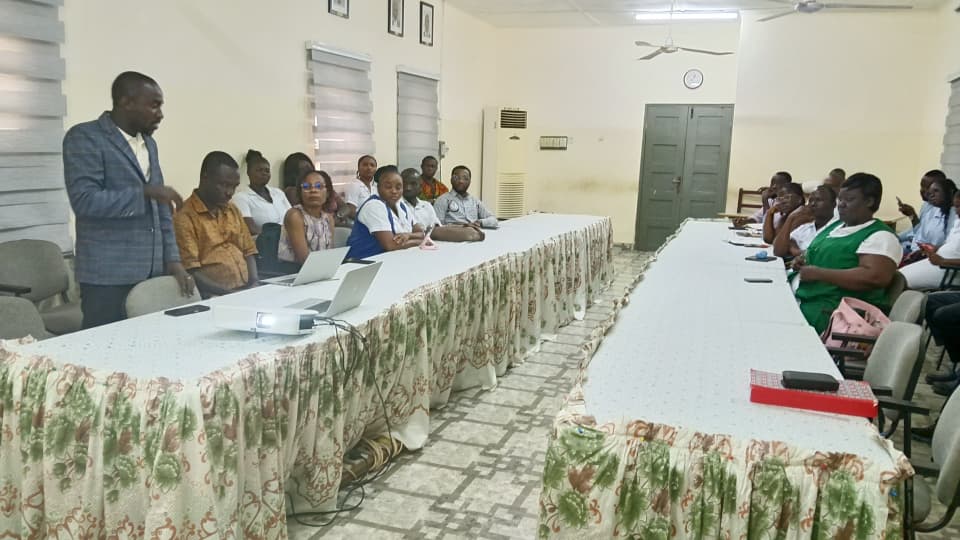
Prof Sarfo said the technology could help extend mental health support to communities where mental health professionals were not readily available, as well as to people who might be unwilling or unable to visit health facilities.
He emphasised that the innovation was not designed to function autonomously as an AI psychiatrist, psychologist or mental health nurse.
Instead, mental health professionals would play a critical role as experts within the system, with a dedicated backend interface through which they could interact with clients before they received face-to-face support at health facilities.
“The experts’ role is not to perform full care or therapy or give medication, no, but to be able to connect with the client and then be able to bring the client to our facilities to care for them,” he noted.
He said professional involvement was essential to ensure the technology was used appropriately and efficiently.
“The app has its work but then we need professionals to be able to make it work efficiently,” he emphasised.
Prof Sarfo said the team’s long-term objective was to scale up the innovation beyond the university environment, expressing the hope that funding could be secured to expand the initiative across Ghana, Africa and eventually beyond the continent.
“For us, scaling up is very important because this is an innovation within an ecosystem where mental health suffers many barriers,” he said.
He said increased access to the innovation could help address some of the challenges associated with mental health, particularly stigma, and reach people who might otherwise not seek professional assistance.
Prof Sarfo said the engagement with mental health professionals was, therefore, an important step towards developing a system that combined technological innovation with professional expertise to improve mental healthcare delivery.
Going forward, he said the team was considering onboarding the Ghana Police Service and other relevant agencies to take appropriate legal and enforcement action where necessary.
Dr Julius Xatse, Director of the Ankaful Psychiatric Hospital, welcomed the innovation, saying it provided an opportunity to rethink traditional approaches to mental healthcare.
He said the use of technology and AI could help widen access to mental healthcare by providing counselling and identifying people who needed mental health support.
“It also moves in tandem with the agenda of the government when it comes to promoting free primary health care.
”This is one way that mental health can have its piece of that particular policy where we can get into the community level, get into the schools, get into second cycle institutions and even primary cycle institutions to be able to render the necessary assistance to the people on the ground,” he noted.
Dr Xatse advocated extending mental health support beyond hospitals to communities, second-cycle institutions and primary schools to provide assistance closer to people who needed it.
GNA
Edited by Alice Tettey/Lydia Kukua Asamoah
Reporter: Prince Acquah
E-mail: [email protected]