By Christiana Afua Nyarko, GNA
Accra, Sept. 20, GNA – For generations, the story has been told in Akuapem that a sacred Asante object captured at the Battle of Katamanso in 1826 became the very spiritual foundation of the Odwira festival.
The story, though very powerful, is also more complicated than the popular version suggests.
As Akuapem marks 200 years of the Odwira tradition beginning from September 21, 2026, questions about the festival’s origins have become increasingly important:
Did Odwira begin in Akuapem only because of the capture of an Asante deity? Was Odwira originally an exclusively Asante festival? Did Asante lose the right to celebrate it after the object was captured? And was the Odosu the same object as the Odwira Apafram?
Historian and Genealogist at the Institute of African Studies, University of Ghana, Mr Kwaku Darko Ankrah, addressed several of these questions in an interview with the Ghana News Agency.
His answers, when placed alongside available historical scholarship, reveal a distinction that is crucial to understanding the festival: there is a difference between what historical evidence establishes, what Akuapem oral tradition remembers and what later interpretations have concluded from those traditions.
The First Myth: “Katamanso created Akuapem’s independence”
One of the most important misconceptions is to suggest that the 1826 victory created Akuapem as an independent political state. It did not.
The Akuapem State had already emerged in the 18th Century following the defeat of Akwamu and the political settlement associated with the Abotakyi Accord of 1733.
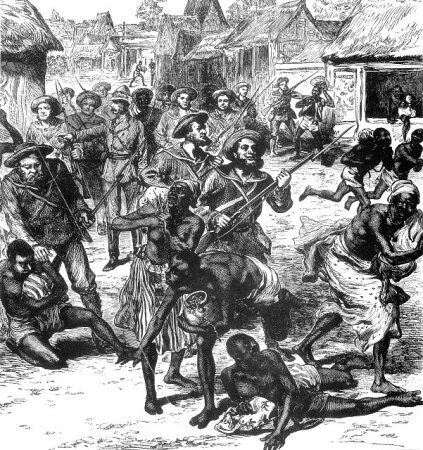
The Accord brought together different communities and established an administrative and military structure under the leadership associated with the Akyem warlord Safori. Katamanso came almost a century later.
What the 1826 victory did was to help protect and consolidate that political order.
Mr Ankrah made the point explicitly during the interview – Akuapem’s political and spiritual autonomy had already been achieved by 1733.
What Katamanso did was to strengthen its unity and defend that autonomy. That distinction matters.
Odwira should therefore not be described as the event that “created” Akuapem. Instead, it became a powerful ritual expression of an already existing political community.
The Second Myth: “Odwira itself began in Asante in 1826”
There is considerably stronger historical evidence that the Asante had an established Odwira tradition long before the Akuapem festival emerged.
Scholarly literature places the establishment of the Asante Odwira tradition in the early Asante State, with one academic account dating its formal establishment to 1717 under Asantehene Osei Tutu I.
That chronology is important because Asante became a Kingdom in 1701.
Osei Tutu I’s reign preceded the establishment of the Akuapem State by several decades.
The historical sequence therefore makes it impossible to argue that Akuapem originated the broader institution of Odwira.
What happened in Akuapem was something different: an existing Akan ritual tradition acquired a new local, political and historical meaning after the war in 1826.
Third Myth: Odwira was simply a “new yam festival”
This is another over-simplification. The new yam is certainly central to the ritual calendar of many Akan societies. Nonetheless, Odwira carries meanings beyond harvest.
Academic studies of Asante religion show that the festival was closely connected to political authority, allegiance, purification and the renewal of the social order.
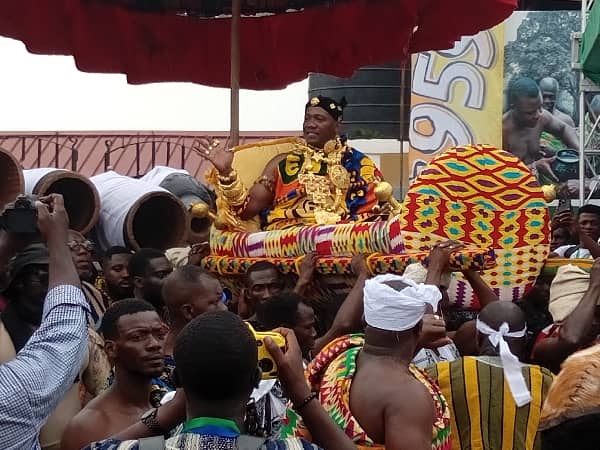
In Akuapem, these meanings became intertwined with the memory of the Katamanso confrontation.
The festival consequently brought together at least three dimensions: agricultural renewal, spiritual purification and historical remembrance.
That combination helps explain why it survived as a major institution rather than becoming merely a harvest celebration.
Fourth Myth: “Odosu and Odwira Apafram were the same sacred objects”
This is one of the most important corrections emerging from available scholarship: they should not automatically be treated as identical.
Research published through the University of Ghana’s Ghana Social Science Journal records testimony distinguishing Odosu, regarded as an important spiritual symbol of the Akuapem State, from Odwira Apafram, identified as being of Asante origin.
This distinction is significant as the Odosu was associated with the spiritual identity of the Akuapem State and was understood in some traditions as a guiding spiritual force associated with the Akyem pioneers.
On the other hand, Odwira Apafram, by contrast, was associated with the Asante ritual tradition.
The two could both have been important to Akuapem’s Odwira rituals without being the same object.
Mr Ankrah himself was cautious when asked specifically about Odosu during the interview, saying he did not want to guess because he could not immediately consult the documentation. That caution is very important.
It would therefore be historically unsafe to collapse all the sacred objects associated with the festival into one object.
Fifth Myth: “Capturing Apafram automatically gave Akuapem ‘sole spiritual authority’ over Odwira”
This is where historical fact and traditional interpretation need to be carefully separated.
Akuapem tradition strongly associates the capture of an Asante sacred object with the subsequent establishment of its Odwira.
There are also scholarly accounts that record the tradition that Nana Addo Dankwa I captured Asante Odwira paraphernalia during the Katamanso campaign.
But the conclusion that this automatically gave Akuapem the “sole spiritual authority” to celebrate Odwira is an interpretation, not a universally demonstrable historical rule.

In typical Akan warfare, the capture of an enemy’s sacred object could carry enormous symbolic importance – it could signify victory, prestige and the defeat of an enemy’s spiritual power. However, that does not necessarily mean the defeated community permanently lost the right to perform the underlying ritual tradition.
The historical record of Asante Odwira itself makes that distinction especially important.
Sixth Myth: “Asante lost the right to celebrate Odwira after Katamanso”
This was the most dramatic claim raised by the Ghana News Agency during the interview.
Mr Ankrah acknowledged that there could be “an element of truth” in the argument because the captured sacred object had been associated with the performance of Odwira.
His reasoning was that if a community lost the deity associated with a ritual, it would face a problem regarding how to perform that ritual in its original form.
However, that is not the same as historical proof that Asante permanently lost the right to celebrate Odwira.
Indeed, scholarship on Asante religious history shows the continuing importance of Odwira and its later forms, including Asanteman Adae Kese.
An academic study describes Asanteman Adae Kese as a modern form of the older Asante Odwira tradition. The historical evidence therefore does not support a simple declaration that “Asante lost Odwira to Akuapem in 1826”.
A more defensible formulation is that Akuapem developed its own Odwira tradition after Katamanso, while Asante retained and transformed its own ritual traditions over time. That distinction avoids turning a powerful oral tradition into an unsupported absolute historical claim.
Seventh Myth: “The festival was invented from nothing after Katamanso”
The opposite extreme is also misleading. The evidence does not suggest that Akuapem had no ritual traditions before 1826.
As Mr Ankrah explained, Akan communities already possessed rituals associated with agricultural renewal and the appearance of new crops.
Different societies gave such practices different names and attached different ritual meanings to them.
Akuapem therefore did not suddenly discover the idea of harvest ritual after Katamanso. What changed was the historical framework into which those practices were placed.
Victory, purification, ancestral remembrance and the capture of an important sacred object gave the emerging Akuapem Odwira a distinctive identity.
Eighth Myth: “Every element of today’s Odwira comes directly from 1826”
That, too, would be difficult to defend historically. The festival has evolved over two centuries. Its central ideas may be rooted in the early 19th Century, but ritual practices inevitably change as societies themselves change.
Today, Odwira includes structured periods of preparation, mourning, path clearing, new-yam rites, public processions, purification of stools, remembrance of ancestors and ceremonial gatherings.
Some elements may preserve older practices while others have been modified, reinterpreted or reorganised.
The festival should therefore be understood as a living tradition rather than a museum piece frozen in 1826.
What, then, is historically secure?
Several points stand on firmer ground: The Battle of Katamanso was fought near Dodowa on August 7, 1826; Akuapem was part of the wider coalition that defeated the Asante forces; Akuapem’s political state had already been established in the 18th Century; the festival now known as Akuapem Odwira is traditionally dated to 1826 and associated with the reign of Nana Addo Dankwa I; historical and scholarly sources also support the existence of an Asante Odwira tradition predating the Akuapem celebration; and Akuapem traditions strongly connect the establishment of their festival with the events and sacred objects associated with Katamanso.
What remains more difficult to establish independently is the precise identity, ownership history and ritual function of every sacred object said to have been captured, particularly the relationship between Odosu, Odwira Apafram and other regalia.
That is precisely where oral tradition, written history and religious memory need to be read together rather than allowing one to automatically replace the others.
A festival born from memory
The most historically compelling interpretation of Akuapem Odwira may therefore lie somewhere between mythology and modern historical reconstruction.
The festival did not emerge because Akuapem suddenly discovered harvest rituals in 1826. Nor did Katamanso create the Akuapem State.
Rather, an established political community experienced a major military victory, returned with memories and symbols of that victory, and incorporated those memories into an existing Akan ritual world. That combination produced something distinctive.
Odwira became a place where Akuapem could remember its ancestors, reaffirm its unity, celebrate agricultural renewal and narrate its survival as a political community.
Two hundred years later, that may be the festival’s most enduring lesson.
However, its importance does not depend on every detail of the tradition being literally identical to what happened on the battlefield.
Its power lies in the way generations have used the memory of Katamanso to explain who they are, where they came from and what binds the different communities of Akuapem together.
That is the history that Odwira has carried for two centuries – a history in which battlefield victory became ritual memory, ritual memory became identity, and identity became a living tradition.
As Akuapem celebrates its bi-centenary of the festival this year, under the theme: 200 Years of Odwira: Honouring Our Heritage, Securing Our Future, thousands of Akuapems both locally and from the diaspora as well as tourists and visitors will commemorate this historical milestone that will be forever etched in their memories.
GNA
Reporter: Christiana Afua Nyarko
Edited by Samuel Osei-Frempong