By Morkporkpor Anku
Accra, Sept. 4, GNA – The Inter-Ministerial Coordinating Committee (IMCC) on Decentralisation has reaffirmed Government’s commitment to deepening democratic decentralisation and strengthening local governance.
The Committee said effective decentralisation remained critical to accountable governance, responsive public service delivery and accelerated development at the local level.
The reaffirmation was made at a high-level meeting of the IMCC at Peduase Lodge, chaired by Vice-President Professor Naana Jane Opoku-Agyemang.
The meeting reviewed strategic policy, institutional, legislative, financing and implementation priorities for advancing Ghana’s decentralisation agenda under the Local Governance Act, 2016 (Act 936).
Prof. Opoku-Agyemang underscored the importance of decentralisation to effective governance and stronger relations between the State and citizens.
She said bringing decision-making and public services closer to citizens was essential to improving governance and ensuring that development responded to local needs.
The Vice-President said decentralisation must ultimately improve citizens’ welfare and protect the environment, with participation and inclusion at the centre of the governance process.
She reaffirmed the Government’s commitment to advancing devolution and strengthening citizen participation, stressing the need to move decisively from policy formulation to implementation.
Prof. Opoku-Agyemang said the approval of the National Decentralisation Policy and Strategic Framework (NDPS) 2026–2030 provided an important foundation, but its success depended on translating the policy into tangible results at the local level.
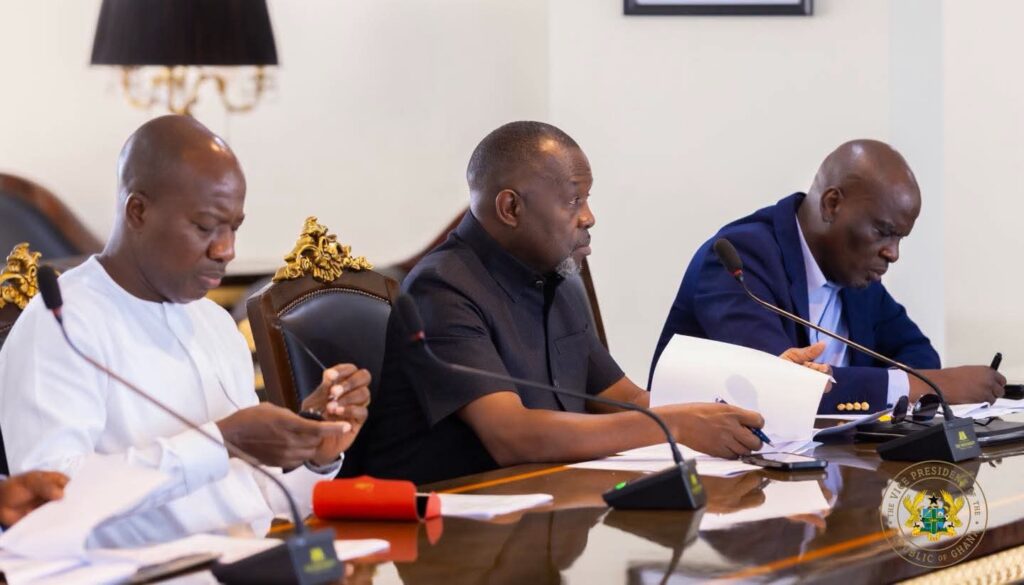
Dr Gameli Kewuribe Hoedoafia, Executive Secretary of the IMCC, briefed the Committee on progress made by the Secretariat towards creating the conditions for effective implementation of the NDPS 2026–2030.
He said the Secretariat, in collaboration with Ministries, Departments, Agencies and other stakeholders, was advancing legislative and administrative reforms to support decentralisation.
Dr Hoedoafia said the reforms included reviews of the Local Governance Act, 2016 (Act 936), the Pre-Tertiary Education Act, 2020 (Act 1049), and the legislative framework governing the Ghana Health Service and Teaching Hospitals.
He said efforts were also being made to strengthen public awareness and citizen engagement, noting that effective decentralisation required informed participation, ownership and accountability.
Dr Hoedoafia said coordination with development partners was being strengthened through mechanisms such as the Decentralisation Sector Working Group.
On financing, he said the Committee considered measures to mainstream decentralisation priorities into sector plans and budgets, increase District Assemblies Common Fund allocations to Metropolitan, Municipal and District Assemblies, improve internally generated revenue and expand fiscal space for local development.
The Committee also reviewed progress towards devolving key sectors, including education, health and roads, and stressed the need for adequate resources, institutional capacity and accountability mechanisms to ensure effective service delivery.
Dr Hoedoafia reaffirmed that successful decentralisation required a coordinated whole-of-government and whole-of-society approach involving central government institutions, the Local Government Service, MMDAs, development partners, civil society, traditional authorities, academia and citizens.
He pledged to provide strategic policy coordination and oversight to accelerate implementation of the NDPS 2026–2030, with emphasis on effective devolution, sustainable financing, institutional coordination, citizen participation and measurable improvements in local governance.
GNA
Edited by Kenneth Sackey
Reporter: Morkporkpor Anku
[email protected]