By Samuel Ofori Boateng, GNA
Trabuom (Ash), Sept. 03, GNA – The Engineering Club of Afua Kobi Ampem Girls Senior High School in the Atwima Kwanwoma district, has developed a 19.5-kilogramme multipurpose drone as part of efforts to promote practical Science, Technology, Engineering and Mathematics (STEM) education among students.
The student-built drone is designed for a range of applications, including intelligence gathering, surveillance, firefighting, delivery services, marine patrol and border surveillance.
The innovation was developed by students at the school’s Engineering Club under the guidance of the club’s lead engineer and tutor, Mr Ferdinand Sam, as part of their Aerospace practical training.
Mr Sam speaking to the Ghana News Agency, said the students had successfully conducted the first test flight of the drone on the Suhum by-pass road.
He said the maiden test flight provided the students with important practical lessons and technical insights that would inform subsequent modifications to improve the drone’s performance.
Mr Sam explained that the students built the drone from scratch, with the project aimed at encouraging young people to use engineering and technology to develop solutions to everyday challenges facing the country.
“The drone has a wingspan of four metres, a length of 3.5 metres and a height of 1.4 metres, with a weight of 19.5 kilogrammes.
Leading the students, we built the drone from scratch, and the idea is to develop solutions to our everyday problems in the country,” he said.
According to him, the Engineering Club was currently taking steps to upgrade the drone following lessons learnt from the first test flight.
He said the improvements would focus on making the drone more effective for its intended applications.
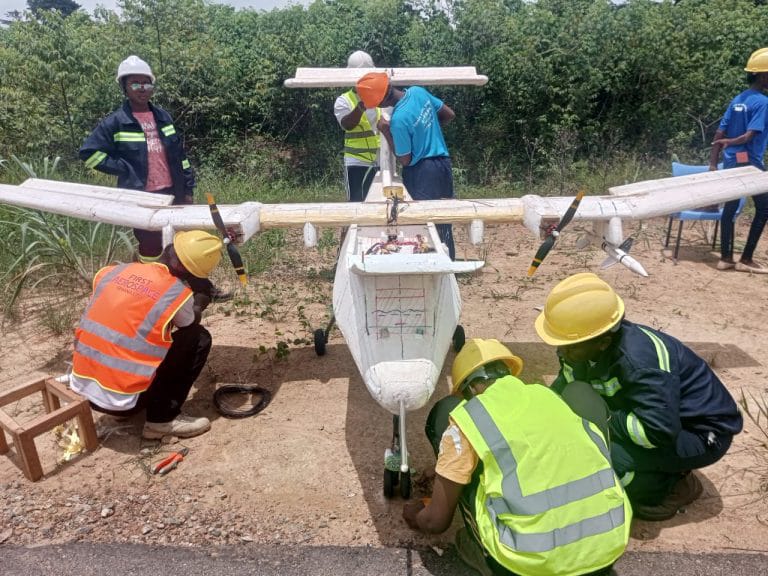
Mr Sam said the project demonstrated the immense potential of Ghanaian students to develop innovative technological solutions when given the necessary practical exposure, mentorship and support.
He encouraged stakeholders in education, industry, and technology to invest more in practical STEM education and provide opportunities for students to transform classroom knowledge into innovative solutions to real-world problems.
The Engineering Club is expected to continue working on the drone as the students seek to improve its capabilities and explore further applications for the technology.
The project highlights the growing importance of practical engineering education in equipping young people with the skills needed to contribute to technological innovation and national development.
GNA
Edited by Kwabia Owusu-Mensah/Kenneth Odeng Adade