By Daniel Adu Darko, GNA
Goaso, Aug. 24, GNA – Fifty women with disabilities and single parents in the Asunafo North Municipality of the Ahafo Region have taken up tree nursing as a practical way of contributing to the fight against deforestation and climate change.
Operating under the name Noble Women with Disabilities, the group is nurturing tree seedlings at three different sites, with about 200 seedlings currently raised.
The initiative, according to the founder of the group, is also aimed at changing the long-held perception that Persons With Disabilities (PWDs) depend solely on begging for their livelihoods.
“We decided to change that narrative by working hard. Our slogan is ‘We can work,’” she told the Ghana News Agency (GNA) in an interview.
She said the women believed that disability should not prevent them from contributing meaningfully to their families, communities, and the country.
“For us, we believe we can do everything regardless of the pace or speed with which we have to accomplish the task or work,” she said.
The group, therefore, decided to adopt tree nursing as a project through which they could contribute to restoring the country’s forest cover while creating an avenue for the women to become economically productive.
The founder said the women were particularly concerned about deforestation and the effects of climate change, hence their decision to join the tree-planting campaign by nurturing seedlings for individuals and organisations interested in planting trees.
Among the species currently available are mahogany, emire and other varieties, while fruit seedlings including mango and orange are also being raised.
She said the group was prepared to nurse other tree species based on specific requests from individuals, organisations and institutions.
The founder explained that the major challenge confronting the initiative was the lack of buyers for the seedlings.
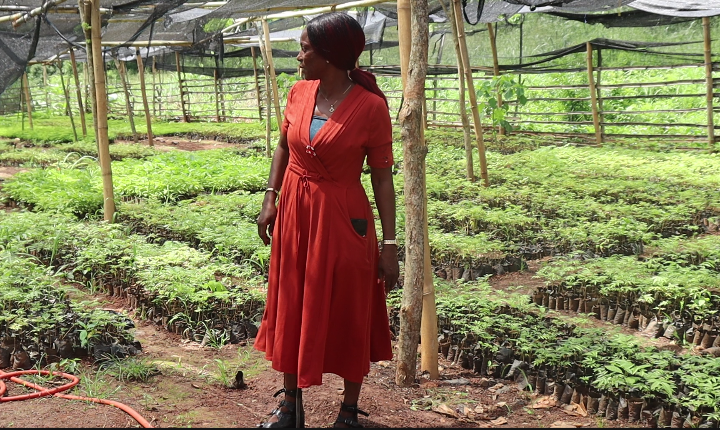
She said although an NGO was supporting the women with labour costs, it was not purchasing the seedlings, leaving the group struggling to sustain the project.
“We are appealing to the public that those who have the goodwill to plant trees to support the fight against climate change should come to us to nurse any species of their interest,” she said.
She appealed to individuals, businesses, schools, civil society organisations and other institutions to patronise the seedlings, saying, such support would go beyond helping the women financially.
“The more people buy our seedlings, the more they support our cause to fight climate change, and we will feel useful to our community and society,” she said.
The initiative demonstrates how persons with disabilities can participate in environmental protection and community development when given opportunities to contribute to their skills and labour.
The women said they hoped that increased patronage would enable them to expand their operations, nurse more seedlings and inspire other PWDs to explore productive ventures rather than depend on public support.
The group currently has 200 seedlings across three sites, with the women determined to grow the initiative into a sustainable enterprise that benefits both their families and the environment.
GNA
Edited by Linda Asante Agyei
Reporter: Daniel Adu Darko
[email protected]