By Prince Acquah
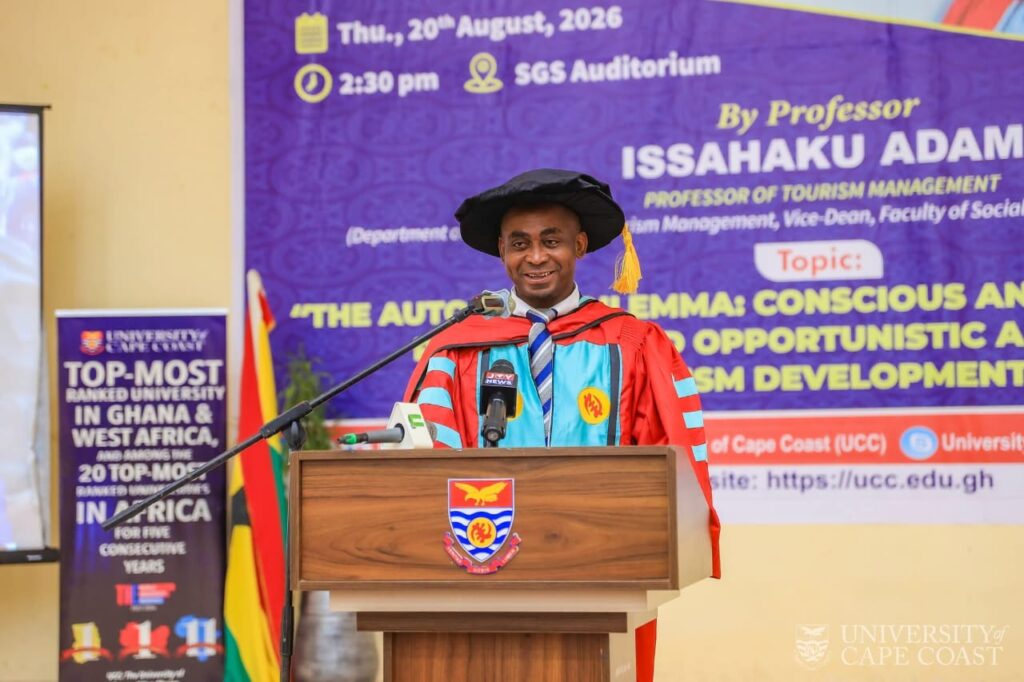
Cape Coast, Aug 27, GNA – Professor Issahaku Adam, a Professor of Tourism Management at the University of Cape Coast (UCC), has called for deliberate state investment and a coordinated approach to tourism development to unlock Ghana’s full tourism potentials.
He observed that the country was replete with tourism resources but had failed to transform many of those resources into sustainable destinations owing to complacency and the “piecemeal, short-term and uncoordinated” approach to developing the sector.
He, therefore, challenged government to overhaul the tourism sector with increased budgetary allocations and invest strategically in tourism products, infrastructure and destinations to attract more visitors and enhance their experience.
Prof Adam made the call when he delivered his inaugural lecture on the theme: “The Autopilot Dilemma: Conscious and Coordinated or Piecemeal and Opportunistic Approach in Ghana’s Tourism Development Journey.”
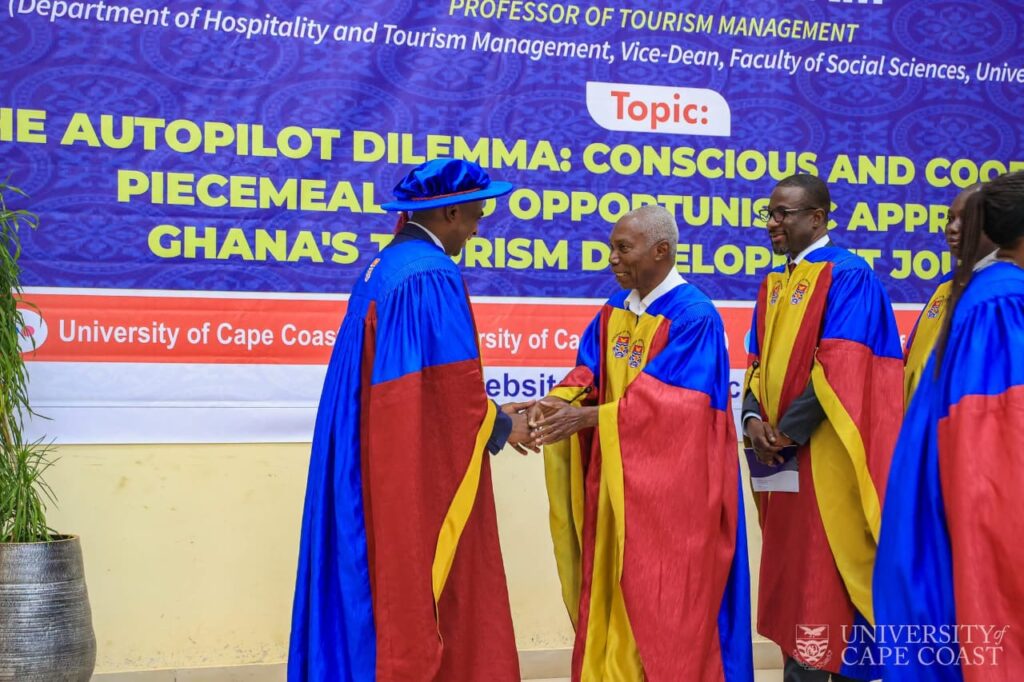
Reflecting on Ghana’s bumpy journey over the years, he acknowledged that the country had made some progress, including improvements in tourism regulation and evaluation, but needed more deliberate and coordinated action to match the tourism resources with its ambitions.
He maintained that although Ghana had recorded significant tourism successes, the country’s performance did not reflect the enormous tourism resources available.
He explained that the country often adopted a “touch-and-go” approach, waiting for new opportunities before investing in them, rather than developing destinations based on a clearly defined long-term vision.
In that regard, the professor pushed for a long-term tourism master plan based on a destination development that would identify products, infrastructure and recreational activities needed to create attractive and sustainable destinations, particularly along the coastline.
According to him, creating a destination required leadership, strategic vision and sustained investment, rather than waiting for tourism resources to generate economic benefits on their own.
“It is one thing to say that you have discovered a waterfall somewhere in your country. And it is another thing to say that you develop it into a destination. It is something that is deliberate, something that you must invest in to get it done,” he said.
While at that, Prof Adam said Ghana’s tourism development plans should move beyond political administrations, warning that regime-based tourism plans were “self-destructive” because they were often short-lived and tied to particular governments.
He further called for the decentralisation of the existing tourism structures to give Metropolitan, Municipal and District Assemblies (MMDAs) greater responsibility and resources to develop and own tourism infrastructure.
That, he argued, would allow local authorities to respond directly to the tourism potential of their areas instead of waiting for central government intervention.
The UCC professor also advocated stronger private-sector participation in the tourism sector through government incentives.
“However, this should follow public investment in infrastructure and destination development that creates a viable market for hotels, restaurants, entertainment facilities and other tourism services,” he said.
Prof Adam raised the alarm over the significant leakage of tourism expenditure in Africa outside the continent due to weak local tourism value chains.
To check this, he said strengthening local supply chains and digital payment infrastructure could enable African countries to retain a much larger share of tourism revenues.
GNA
Edited by Alice Tettey /Benjamin Mensah
Reporter: Prince Acquah
Reporter’s e-mail address: [email protected]