By Edward Dankwah
Accra, Aug. 28, GNA – Rev. Prof. Samuel Oheneba-Dornyo, President of Oheneba-Dornyo University College of Counselling Psychology (ODUCCP), says timely professional counselling can restore hope, protect families, preserve careers and, in some circumstances, save lives.
He said mental health challenges could affect anyone, regardless of social status, educational background, spirituality or professional achievements, making access to qualified counselling essential to prevent emotional distress from escalating into crisis.
Rev. Prof. Oheneba-Dornyo made the remarks at the 11th Graduation Ceremony of the 2026 batch of Executive Certificate in Counselling and Master of Arts in Counselling graduates in Accra, held under the theme: “Knowledge with Compassion: Balancing Academics with Practical Ministry to Heal the Hurting.”
He said Ghana had recorded painful cases involving people from diverse professional and social backgrounds who had died by suicide, stressing the need for society to be more sensitive towards people experiencing emotional and psychological difficulties.
The ODUCCP President said harsh words, public humiliation and relentless criticism could worsen the pain of individuals struggling silently.
“Neither status, education, spirituality, nor professional success makes anyone immune to emotional pain,” he stressed.
He called for a society where people could seek psychological support without shame and discuss their challenges without fear of condemnation.
Rev. Prof. Oheneba-Dornyo said professional counselling should not be regarded as a luxury or reserved for people experiencing severe mental health crises, but as an important preventive intervention that could help individuals identify distress early, develop healthy coping mechanisms, resolve conflicts, manage grief and trauma, and strengthen relationships.
He urged institutions to make deliberate provisions for the psychological wellbeing of their members, just as they provided support for physical health, security, and financial management.
Untreated emotional and psychological difficulties, he said, could lead to impaired judgement, damaged relationships, reduced productivity and compromised safety, potentially affecting institutional performance and stability.
Rev. Prof. Oheneba-Dornyo urged the graduands to regard counselling as more than a qualification or means of employment, describing it as a sacred trust requiring compassion, professionalism and integrity.
He encouraged them to listen without prejudice, protect confidentiality, maintain professional boundaries, recognise their limitations, and make appropriate referrals when necessary.
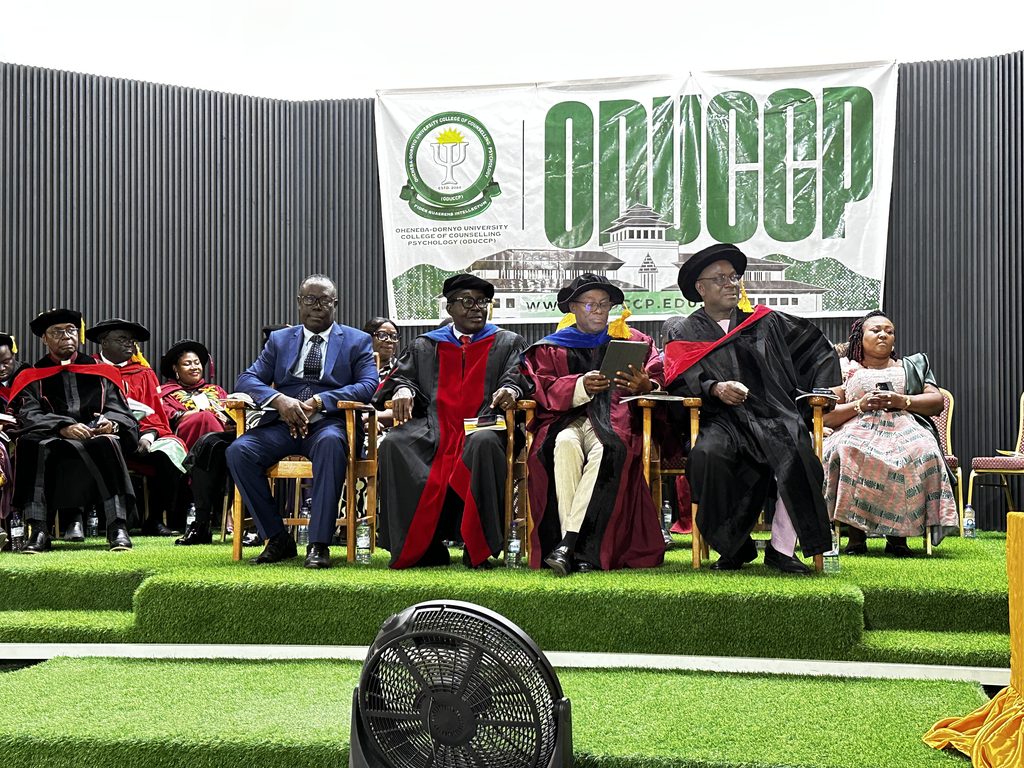
Rev. Prof. Paul Frimpong-Manso, President and Founder of Frimpong-Manso Institute and Special Guest of Honour, urged the new counselling professionals to combine academic knowledge with compassion to effectively support people facing emotional and psychological challenges.
He said although technological advancement was rapidly transforming society, emotional and psychological distress remained widespread, creating an urgent need for competent and compassionate counsellors.
He described the graduation as not only a celebration of academic achievement but also a commissioning for the graduands to place their knowledge, skills and responsibilities at the service of humanity.
“Knowledge enables counsellors to understand human behaviour, emotional distress and psychological disorders, while compassion allows them to respond with patience, dignity and genuine care,” he added.
Rev. Prof. Frimpong-Manso urged the graduands to uphold high ethical standards, protect confidentiality, maintain professional boundaries and work within their areas of competence.
He also encouraged them to help demystify mental health in Ghana by educating communities that seeking professional counselling was not a sign of weakness or lack of faith, but a courageous step towards healing.
He urged the new professionals to advocate for vulnerable people and use their expertise to promote healthier schools, stronger families and safer communities, while speaking against stigma, abuse, discrimination, and exploitation.
He said Ghana and Africa needed competent, ethical and compassionate counsellors capable of responding effectively to the growing emotional and psychological needs of society.
GNA
Edited by Audrey Dekalu