By Benjamin Adamafio Commey
Accra, Aug. 10, GNA – Dr Gameli Hoedoafia, Executive Secretary of the Inter-Ministerial Coordinating Committee on Decentralisation (IMCC), has called for a fundamental reset of Ghana’s decentralisation system to improve public service delivery and accelerate local development.
He said the next phase of decentralisation must move beyond the establishment of institutions and transfer of functions to focus on the quality of services delivered, responsiveness of local institutions and tangible development outcomes for citizens.
Dr Hoedoafia made the call on Monday at the opening of a two-day National Dialogue on Decentralisation and Responsive Governance in Accra, organised by the IMCC to deliberate on the future of decentralisation and promote responsive local governance.
The dialogue, held on the theme: “Resetting Democratic Decentralisation for Accountable Public Service Delivery and Accelerated Local Development,” brought together regional ministers, Metropolitan, Municipal and District Chief Executives (MMDCEs), traditional leaders, local government experts, development partners, civil society organisations and other stakeholders.
It also coincided with the commemoration of African Decentralisation and Local Development Day (ADD), observed annually on August 10.
Dr Hoedoafia said Ghana had made significant progress since the decentralisation process began more than three decades ago, but could not afford to become complacent, adding that existing local governance structures needed to be strengthened to deliver better outcomes.
“Policy approval is not our finish line. It is our starting point. The real test now lies in coordination, effective implementation and delivery,” he said.
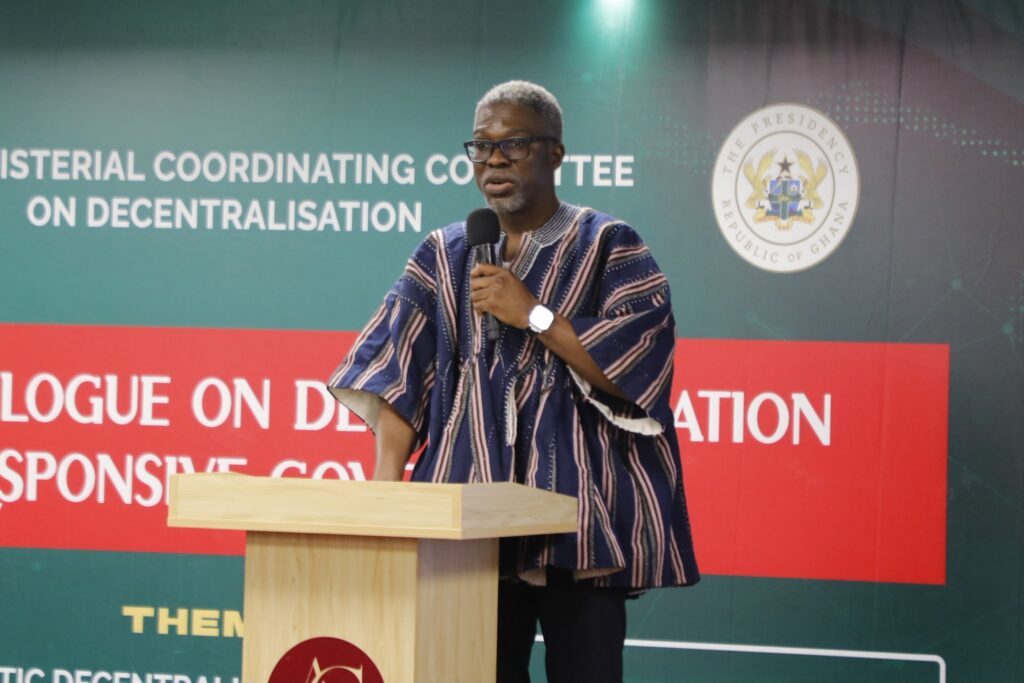
Dr Hoedoafia said Cabinet’s approval of the National Decentralisation Policy and Strategic Framework (NDPS) 2026-2030 presented an opportunity to translate policy commitments into measurable improvements in the lives of citizens.
He cautioned against allowing the framework to become another policy document without effective implementation, stressing the need for a coordinated, whole-of-government approach to decentralisation.
Dr Hoedoafia said the ultimate measure of decentralisation should be tangible improvements in communities, including roads, markets, health facilities, water systems, classrooms and other local infrastructure.
He said the national dialogue would serve as an annual platform for reflection, accountability, partnership and action, bringing together government, local authorities, traditional leaders, development partners, civil society, academia, the private sector and citizens.
Dr Hoedoafia urged stakeholders to renew their commitment to a local governance system that was democratic, accountable, adequately empowered and responsive to citizens’ needs.
He said Ghana’s participation in the ADD provided an opportunity to reaffirm the country’s commitment to bringing governance closer to the people and ensuring that development reflected local priorities.
Mr Ahmed Ibrahim, Minister for Local Government, Chieftaincy and Religious Affairs, said stronger financial support for Metropolitan, Municipal and District Assemblies (MMDAs) was necessary to enable them to effectively deliver development to local communities.
He said strengthening the capacity and financing of the MMDAs was critical to improving sanitation and building resilient communities.
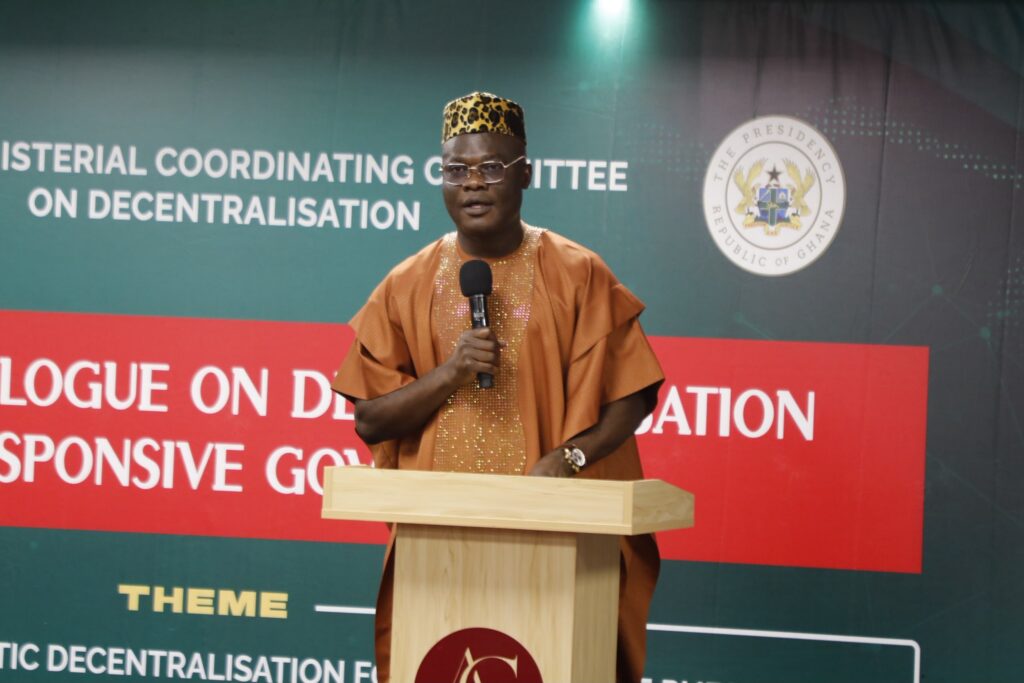
Mr Ibrahim said sanitation could not be addressed through policy alone, stressing the need for adequate resources, stronger inter-ministerial coordination, accountability and effective project execution at the local level.
“Without adequate financial resources, we cannot build the capacity of our assemblies or deliver the sanitation and other essential services our communities need.
“The MMDAs must have the fiscal space to invest in sanitation, water and other critical services, rather than merely administering scarcity,” he said.
Mr Ibrahim said the Ministry had issued fee-fixing guidelines for 2026-2030 to establish transparent standards for fees, levies and charges.
He said guidelines for the utilisation of the District Assemblies Common Fund (DACF) were also intended to provide assemblies with greater fiscal space to provide essential services.
Mr Ibrahim called for stronger collaboration among the Ministry of Finance, MMDAs, development partners, civil society and other stakeholders to mobilise adequate resources for sanitation, drainage and flood mitigation.
He also urged assemblies to strengthen revenue mobilisation, technical capacity, monitoring and accountability, stressing that policy frameworks alone could not deliver results without adequate financing.
The Minister assured that the Government remained committed to providing the policy and fiscal frameworks needed to empower local authorities, but said sustained progress would depend on coordinated action, accountability and adequate resources.
Madam Magdalene Wust, Deputy Head of Cooperation at the Embassy of Switzerland in Ghana, speaking on behalf of development partners, commended the Government for its continued commitment to decentralisation and the approval of the National Decentralisation Policy and Strategic Framework 2026-2030.
She said the framework provided a critical basis for advancing decentralised governance, but called for stronger oversight, accountability, citizen participation and financial autonomy at the district level.
Madam Wust stressed that national institutions must strengthen monitoring and supervision to ensure that subnational governments effectively delivered on their mandates.
She assured that development partners remained committed to supporting Ghana’s decentralisation agenda through stronger coordination and strategic partnerships.
GNA
Edited by Kenneth Sackey
Reporter: Benjamin Adamafio Commey