By Benjamin Adamafio Commey
Accra, Aug. 24, GNA – Mr Samuel Abu Jinapor, a former Minister of Lands and Natural Resources has proposed the establishment of an independent body, backed by law, to enforce mining regulations and fight illegal small-scale mining, otherwise known as galamsey.
He said the persistent failure of successive governments to make sufficient progress in tackling the menace required a new institutional approach that would insulate enforcement from political considerations.
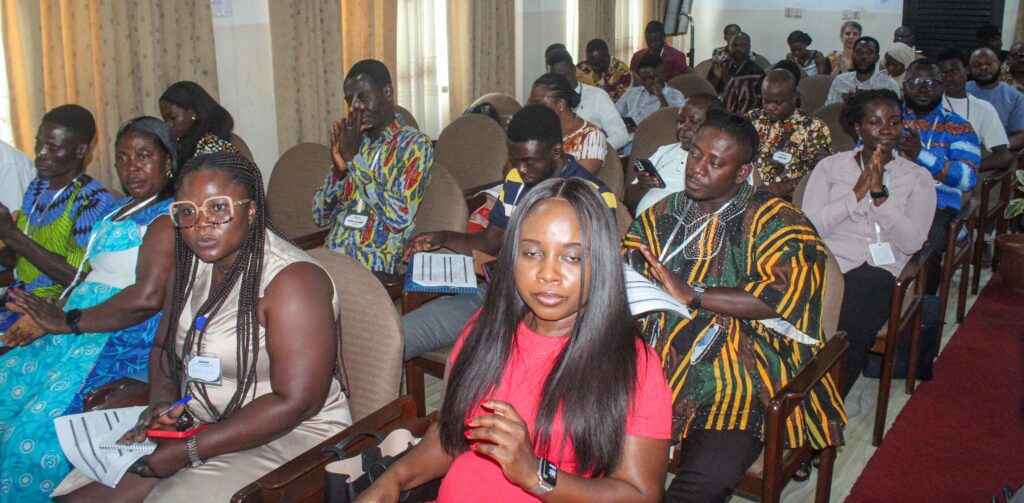
Mr Jinapor made the suggestion in Accra on Monday at the launch of the Ghana component of the “Justice in Critical Minerals Governance and Energy Transition” project.
The project seeks to improve how countries pursue clean energy and critical mineral extraction in ways that are fair, just, and beneficial to all stakeholders.
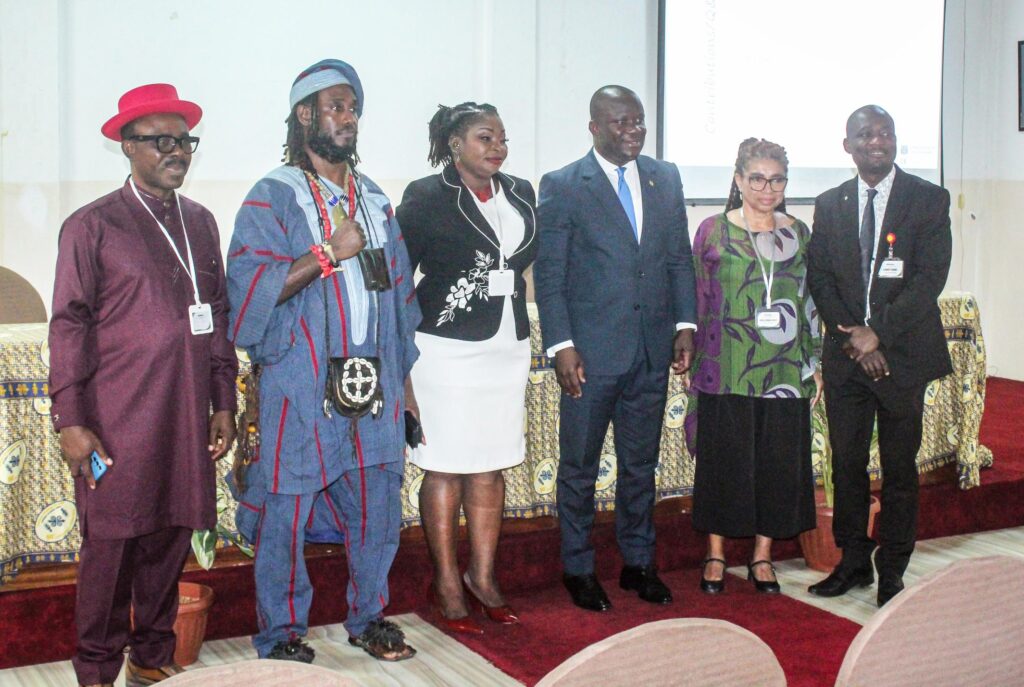
Funded by UK Research and Innovation (UKRI) and led by Dr Clement Sefa-Nyarko of King’s College London, the project is being implemented collaboratively in Ghana, Australia, and Chile, with the Ghana component co-led by researchers from the Institute of African Studies, University of Ghana.
Mr Jinapor, a New Patriotic Party (NPP) Member of Parliament for Damongo, said political considerations and a lack of courage to take decisive action had constrained governments in the fight against illegal mining.
“If I was to relive that life, I think I would have made a proposal to the government or the Cabinet that it’s about time that we set up an independent body…to be responsible for dealing with illegal small-scale mining,” he said.
The proposed institution should be created through an Act of Parliament or another appropriate legal framework, with a clear mandate to enforce mining laws and regulations.
“The Government can still retain the authority…where the President holds these minerals in trust for the people, in terms of granting mining leases and licences,” he said.
“But the enforcement of the rules and regulations relating to the mining sector, I would say that we should have an independent body to do that.”
He cited Australia and Canada as examples of countries where agencies responsible for enforcing relevant laws operate independently of the Executive.
Mr Jinapor also defended environmental activism, saying citizens seeking to protect water bodies and communities from the effects of mining should not be criminalised for legitimate advocacy.
However, he cautioned that activism should not be used to justify unlawful conduct, citing an incident at Obuasi where local people invaded a large-scale mining concession and were trapped underground.
He called for stronger enforcement across the extractive sector, saying both illegal operators and large-scale mining companies must be held accountable for breaches of the law.
“Activism should be encouraged, and activists should be celebrated, because it is through activism and advocacy that we can make progress in dealing with these matters,” he said.
On multinational mining companies, Mr Jinapor said Ghana needed to balance the attraction of foreign capital and expertise with protection of the national interest.
He said limited technology, capital and technical capacity made strategic partnerships necessary, but stressed that the country should retain more value through refining, processing, technology transfer, skills development and local participation.
He also urged African resource-rich countries to develop a common approach to critical minerals governance and value addition to strengthen their bargaining position in global markets.
Dr Sefa-Nyarko said the project would examine how cultural expressions and traditional knowledge could contribute to policy discussions on sustainable mining and extractive justice.
He said the research would explore how communities expressed ideas about justice, accountability, environmental responsibility and resource stewardship through storytelling, music, proverbs, visual arts, performances and folklore.
The findings would be discussed through co-creation workshops involving community members, traditional leaders, government institutions, civil society organisations and other stakeholders.
Prof Samuel Ntewusu, the Director, Institute of African Studies, said critical minerals should become a catalyst for Ghana’s industrialisation and shared prosperity rather than reinforce dependence on raw material exports.
Ghana’s Energy Transition Framework recognised the strategic importance of minerals such as lithium and graphite for developing battery manufacturing and electric vehicle value chains.
Prof Ntewusu called for a minerals governance framework that balanced investment and economic growth with environmental protection, community participation, transparency and intergenerational equity.
He also urged policies that placed communities at the centre of decision-making while recognising African arts, folklore and traditional knowledge in shaping approaches to justice and sustainable resource management.
He expressed optimism that lessons from Ghana, Chile and Australia would contribute to global efforts to establish fair, inclusive and culturally grounded governance systems for critical minerals.
GNA
Edited by Agnes Boye-Doe
Reporter: Benjamin Adamafio Commey