A GNA Feature by James Amoh Junior
Accra, July 28, GNA – One hundred and five years after its founding, the Communist Party of China (CPC) remains one of the world’s most studied political institutions.
Its transformation of China, from a nation struggling with poverty and instability into the world’s second-largest economy, has inspired admiration, debate and scholarly inquiry in equal measure.
As the Party marks its 105th anniversary, conversations in Accra and reflections from the Museum of the Communist Party of China in Beijing offer fresh insight into why its governance journey continues to command global attention.
Why the Communist Party at 105 Matters
When representatives of Ghana’s major political parties gathered in Accra to commemorate the 105th anniversary of the Communist Party of China, the anniversary became the starting point for a broader conversation, one that stretched beyond politics to the enduring questions of leadership, development and national transformation.
The commemoration brought together representatives of Ghana’s political parties and civil society organisations for an inter-party dialogue examining the Communist Party of China’s 105-year journey and the governance ideas that have shaped China’s remarkable transformation.
While ideological differences remained evident, participants shared a common curiosity: what explains China’s rise, and are there lessons that developing countries can thoughtfully adapt without abandoning their own political traditions?
Chinese Ambassador to Ghana, Mr. Cong Song, described the Party’s journey as one characterised by perseverance, reform and an unwavering commitment to improving the lives of the Chinese people.
He argued that long-term planning, continuous reform and people-centred development had enabled China to evolve from one of the world’s poorest countries into a modern economic powerhouse.
His remarks reflect a recurring theme in China’s contemporary governance narrative: that the legitimacy of development is ultimately measured by improvements in people’s livelihoods, economic opportunity and national stability.
Yet understanding the Communist Party of China requires looking beyond diplomatic speeches and economic statistics.
It demands an appreciation of how China tells its own story, remembers its past and connects that past to its ambitions for the future.
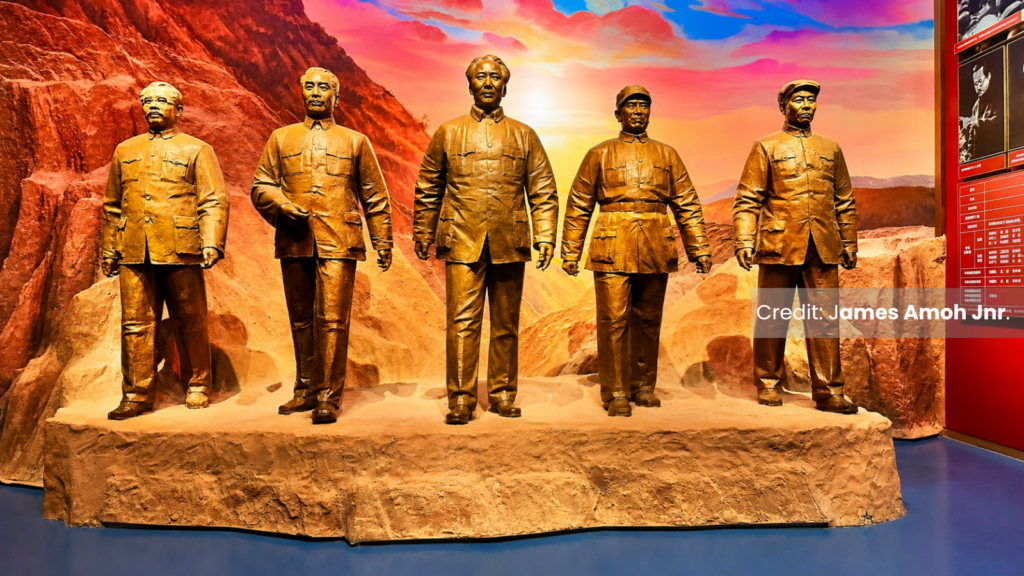
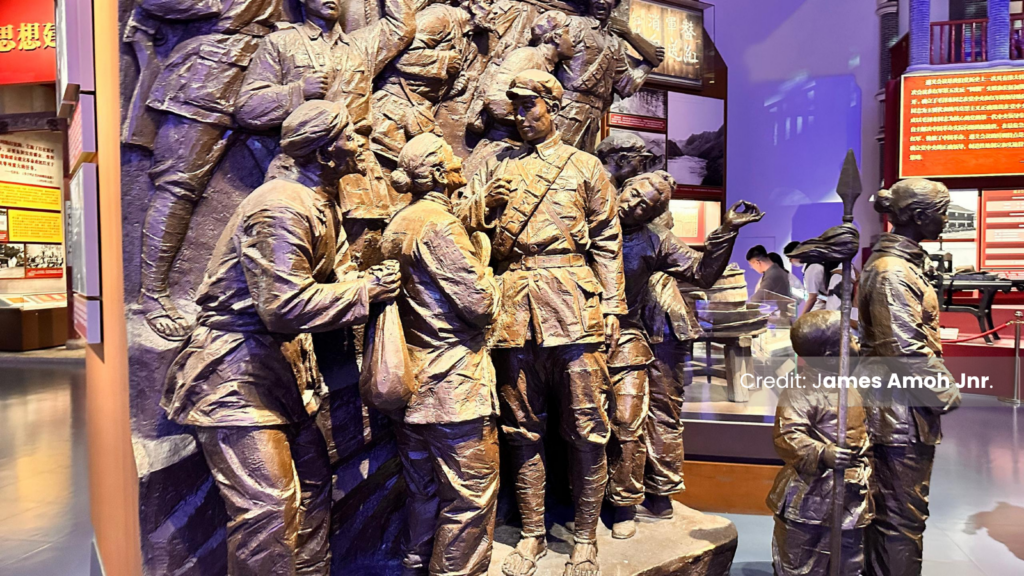
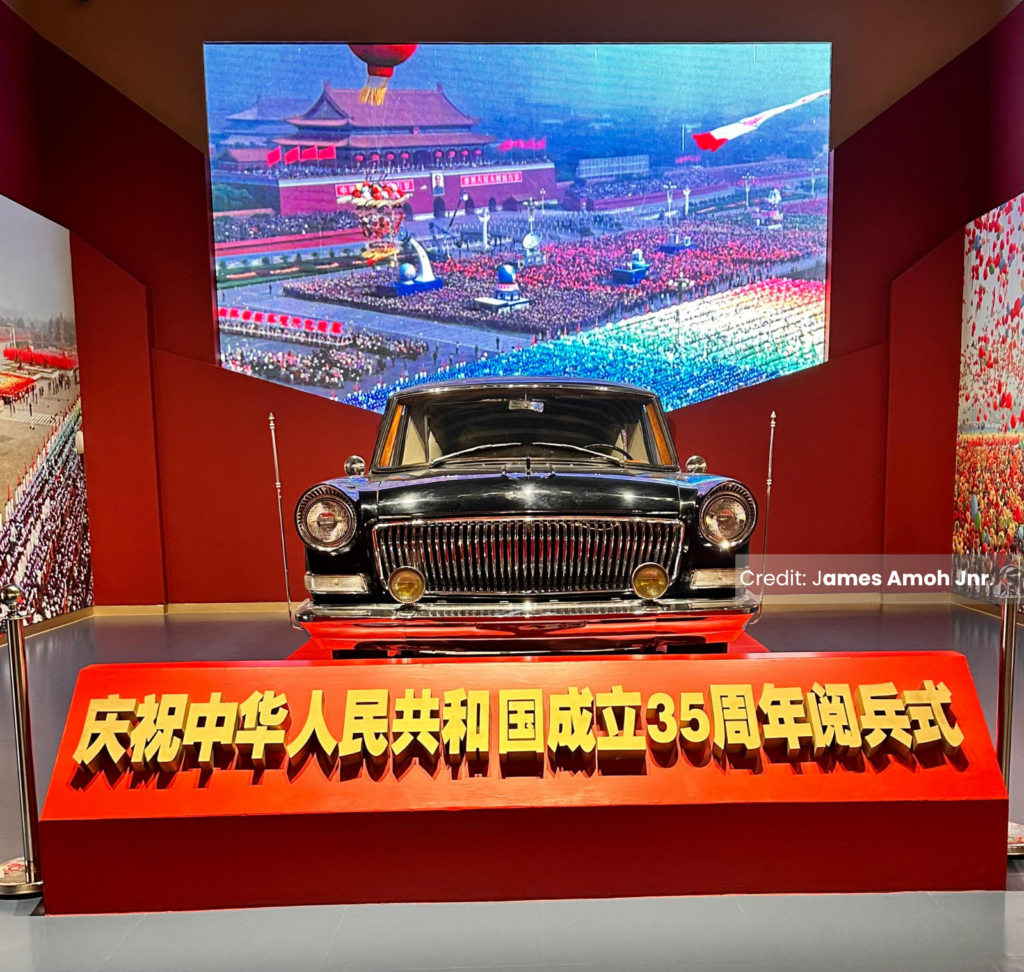
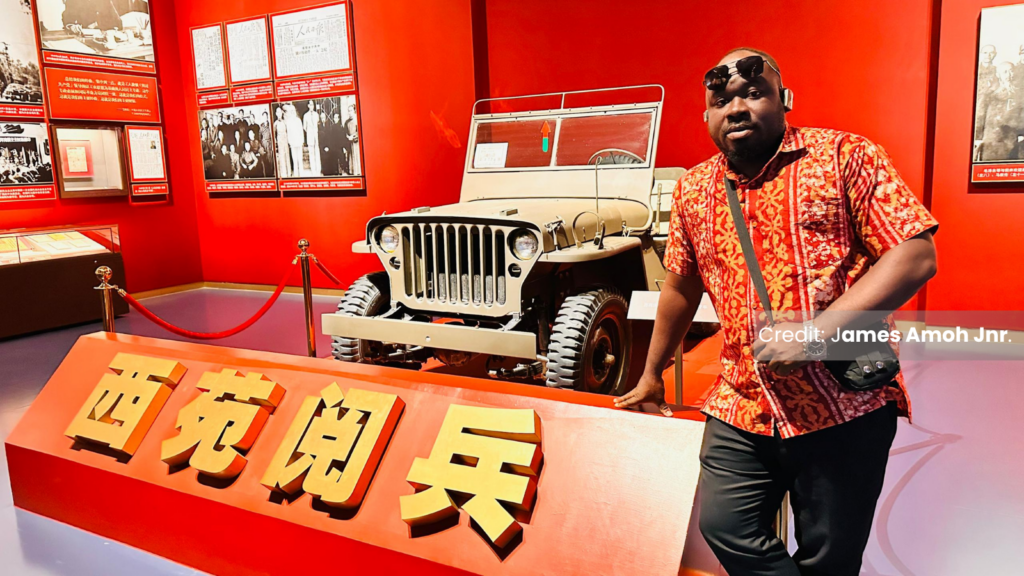
That story is perhaps told most vividly inside the Museum of the Communist Party of China in Beijing.
Walking Through China’s Political Memory
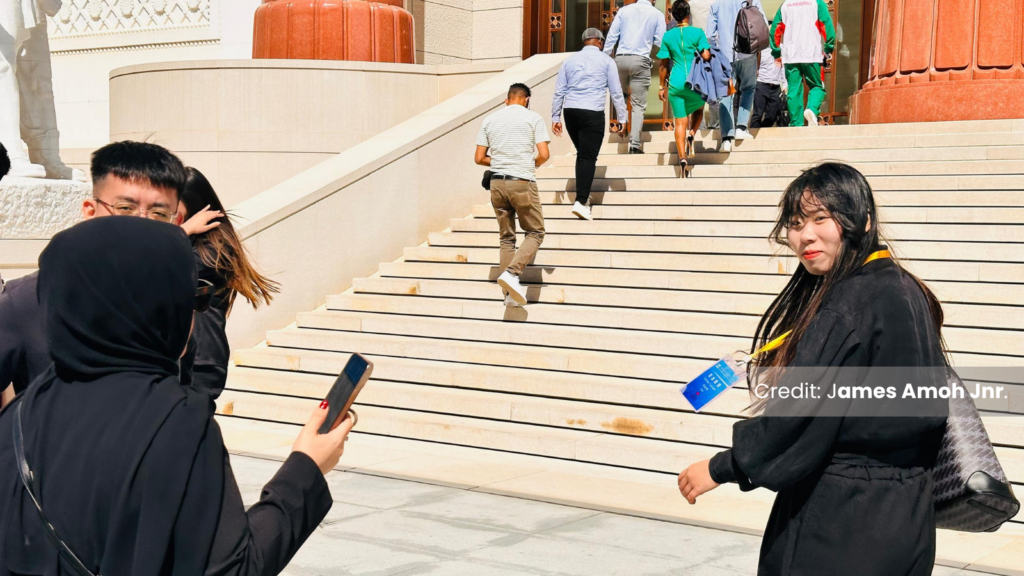
Standing in Beijing’s Olympic Green, only a short distance from the iconic Bird’s Nest Stadium and the Water Cube, the Museum of the Communist Party of China is impossible to ignore.
Opened in 2021 to commemorate the Party’s centenary, the imposing structure is more than a repository of historical artefacts; it is a carefully curated narrative of China’s political evolution.
Walking through its galleries, visitors trace the Party’s journey from its founding in Shanghai in 1921 through revolution, the establishment of the People’s Republic in 1949, the reform and opening-up era, and China’s emergence as a global economic power.
Photographs, handwritten documents, multimedia installations and reconstructed historical scenes combine to present a continuous story of struggle, resilience and renewal.
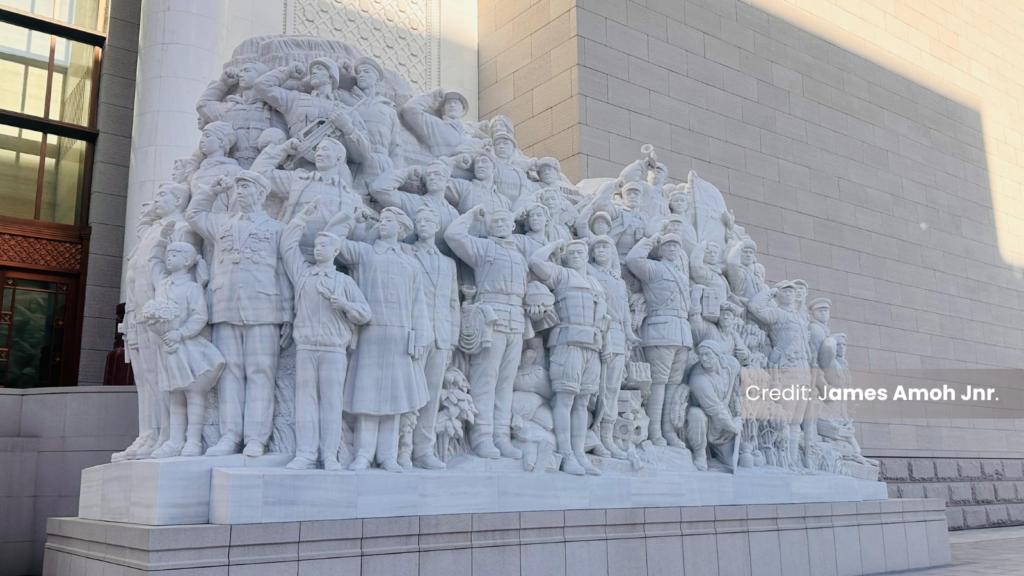
The museum’s narrative is not merely chronological. It seeks to explain how successive generations of leadership have interpreted national challenges and responded to changing realities while pursuing a long-term vision of development.
Whether one agrees with every aspect of that narrative or not, the museum demonstrates the importance China places on preserving institutional memory and presenting governance as an evolving process rather than a series of isolated political events.
As you leave the museum, one question lingers in your mind: beyond China’s unique political system, what aspects of its development journey resonate with countries seeking their own paths to prosperity?
That question would re-emerge thousands of kilometres away, during conversations in Accra, where Ghanaian political leaders and civil society representatives reflected on China’s experience through the lens of their own national aspirations.
From Revolution to Reform: Reinventing a Nation
When the Communist Party of China was founded in 1921, few could have predicted that the small revolutionary movement would one day lead the transformation of a country into the world’s second-largest economy.
Its early decades were marked by conflict, political upheaval and foreign invasion, culminating in the establishment of the People’s Republic of China in 1949.

The immense task before the new leadership extended far beyond securing political power. It was about rebuilding a fractured nation, expanding access to education and healthcare, developing industry and creating the conditions for economic self-reliance.
The defining turning point came in 1978 with the introduction of the reform and opening-up policy under Deng Xiaoping.
Rather than abandoning the Party’s leadership, the reforms sought to reshape how that leadership could deliver economic growth and improve living standards.
Special Economic Zones attracted foreign investment. Manufacturing became the engine of growth. Rural reforms increased agricultural productivity, while sustained investments in infrastructure, education and industry accelerated development.
Over the following decades, China emerged as the world’s manufacturing hub, built one of the largest high-speed rail networks, expanded its technological capabilities and lifted hundreds of millions of people out of extreme poverty, an achievement recognised by international development institutions.
Ambassador Cong Song believes this progress reflects the Party’s ability to adapt to changing circumstances while maintaining long-term national objectives.
Successive generations of leadership, he noted, pursued reforms suited to China’s realities instead of treating governance as a fixed formula.
That capacity for adaptation has become one of the Communist Party’s defining characteristics. From industrialisation and technological innovation to environmental protection and rural revitalisation, China’s development strategy has continued to evolve in response to new challenges without abandoning its broader vision of national rejuvenation.
For many observers, the central question is no longer whether China’s political model should be replicated. Rather, it is how long-term planning, institutional discipline and policy continuity have contributed to one of the most remarkable development stories of the modern era.
Governance Beyond Politics
Discussions about China often become confined to ideological debate. Yet beneath those debates lies another conversation, one increasingly attracting policymakers, researchers and development practitioners across the Global South.
It is a conversation about governance.
At its heart is a simple but important question: how does a country sustain national development over decades rather than electoral cycles?
China’s experience offers no universal blueprint. Its political institutions, history and cultural traditions are uniquely its own. Even so, several governance principles emerging from its development journey continue to attract international interest.
One is long-term planning. Through successive Five-Year Plans, industrial strategies and large-scale infrastructure programmes, China has consistently pursued clearly defined national priorities extending well beyond immediate political considerations.
Another is institutional continuity. Major investments in transport, manufacturing, energy and technological innovation have often been implemented over many years, allowing policies to mature instead of being abandoned with changes in leadership.
Equally significant has been sustained investment in human capital. Education, scientific research, vocational training and technological innovation have become central pillars of China’s development agenda, supporting rapid industrialisation and economic diversification.
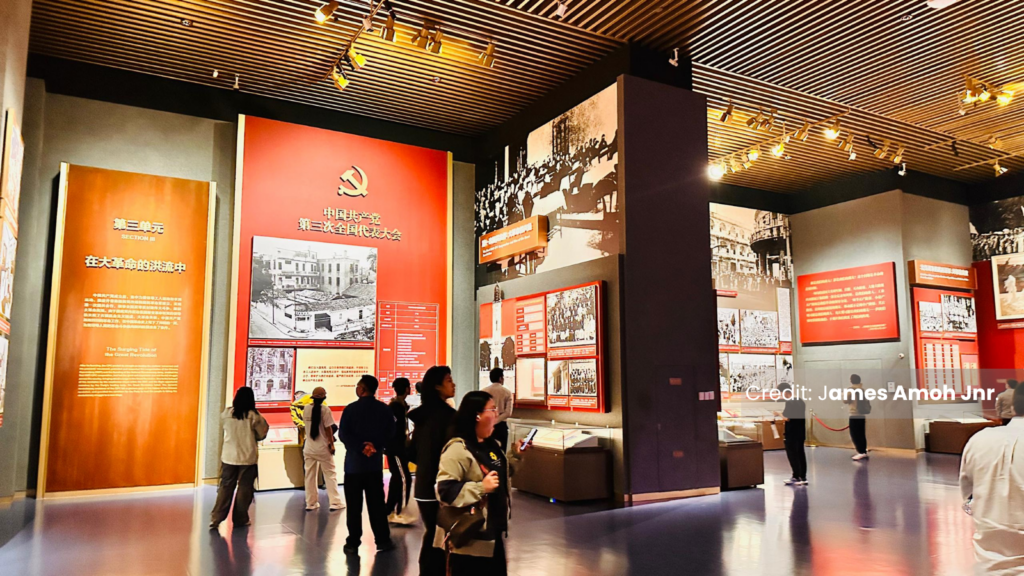
Poverty reduction has also remained a consistent national priority. Through targeted interventions, rural development and infrastructure expansion, China sought to improve living standards while reducing disparities between urban and rural communities.
Whether viewed with admiration, curiosity or scepticism, these developmental outcomes have made China’s governance experience a subject of serious international study.
That reality was evident in Accra, where the discussion shifted from ideology to a more practical question: what aspects of China’s development experience might inform Ghana’s own journey without compromising its democratic traditions?
Ghana’s Conversation with China
If the Museum of the Communist Party of China presents the Party’s understanding of its own history, the anniversary dialogue in Accra offered an opportunity to observe how that history is increasingly interpreted beyond China’s borders.
What distinguished the event was not simply the commemoration of the CPC’s 105th anniversary, but the diversity of political voices willing to engage with China’s development experience.
Representatives of Ghana’s political parties and civil society organisations approached the discussion from different ideological traditions, yet many arrived at a similar conclusion: China’s transformation deserves careful study, not because its political system should be replicated, but because its development experience raises important questions about governance, leadership and national planning.
For Samia Nkrumah, former Chairperson of the Convention People’s Party (CPP), the conversation began with history.

She recalled the enduring friendship between Ghana’s first President, Osagyefo Dr. Kwame Nkrumah, and Chairman Mao Zedong, describing it as one of the earliest symbols of solidarity between Africa and the People’s Republic of China.
Ghana, she noted, was among the first African countries to establish diplomatic relations with China and later supported the country’s restoration to its lawful seat at the United Nations.
To her, the relationship has always represented more than diplomacy. It reflected a shared aspiration among newly independent nations to pursue development on their own terms.
Looking ahead, she argued that Ghana-China cooperation should increasingly focus on industrialisation, manufacturing, technology transfer and innovation — areas capable of creating employment and supporting sustainable economic growth.
Veteran journalist and General Secretary of the Socialist Movement of Ghana, Mr. Kwesi Pratt Jnr., examined China’s experience from a different perspective.
He pointed to the Communist Party’s role in overseeing one of history’s most rapid economic and social transformations, citing achievements in poverty reduction, infrastructure development, scientific advancement and technological innovation.
While acknowledging that every nation must chart its own development path, he argued that China’s experience demonstrates the value of strategic planning, national confidence and leadership committed to long-term goals.

Representatives of both the National Democratic Congress (NDC) and the New Patriotic Party (NPP) also reaffirmed Ghana’s longstanding friendship with China, expressing support for continued cooperation in trade, education, healthcare, infrastructure and people-to-people exchanges.
Although the parties often disagree on domestic policy, their participation illustrated an important reality: China’s development story has become a subject of discussion that transcends ideological boundaries.
The dialogue was less about political systems than about understanding how institutions, planning and policy consistency can contribute to national development.
Lessons Without Replication
Every country’s development story is shaped by its own history, institutions and political culture. China’s path cannot simply be transplanted elsewhere, nor should it be viewed as a universal model.
Yet that does not diminish the value of studying its experience.
The questions raised by China’s transformation are relevant to governments across the developing world. How can national development strategies survive changes in political leadership? How can institutions become stronger than the individuals who lead them? How can investments in education, technology and infrastructure create lasting economic opportunities? And how can governments maintain a consistent focus on improving the lives of their citizens?
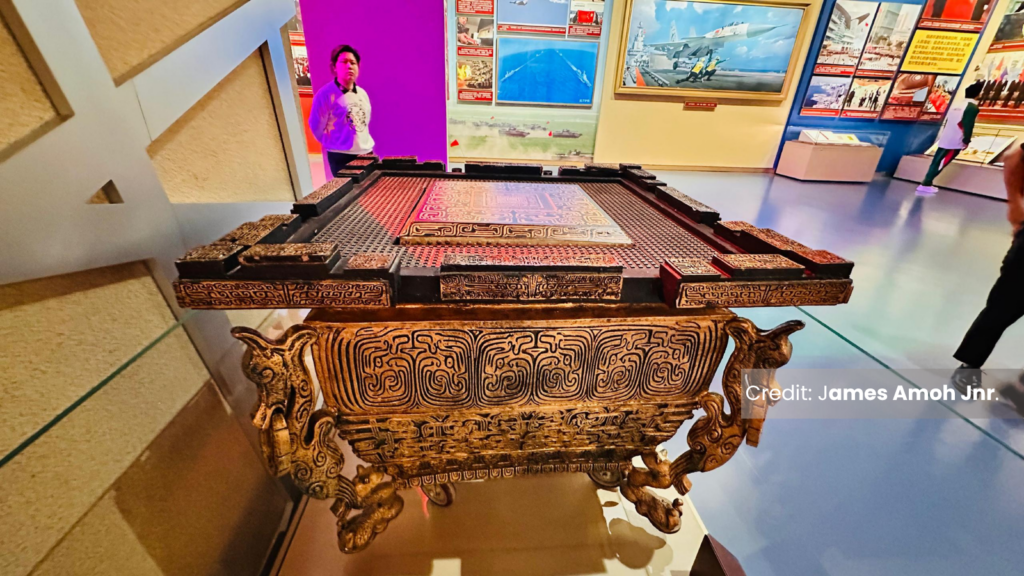
China does not provide ready-made answers to these questions. It offers something equally valuable: a case study demonstrating the importance of long-term planning, institutional capacity, policy continuity and sustained investment in human capital.
For Ghana, where industrialisation, economic diversification and the African Continental Free Trade Area remain central to national aspirations, those lessons deserve thoughtful consideration. The challenge is not to become another China, but to strengthen Ghana’s own institutions while remaining faithful to its democratic values and constitutional order.
Ultimately, development is not a competition between political systems. It is a continuous search for policies capable of expanding opportunity, reducing poverty and improving the well-being of citizens.
A Century That Continues to Inspire Debate
As I left the Museum of the Communist Party of China in Beijing, I was struck not only by the scale of its exhibitions but also by the confidence with which a nation had chosen to tell its own story.
Every gallery, photograph and artefact formed part of a larger narrative about resilience, renewal and the pursuit of national development.
Weeks later, in Accra, reflections of that narrative resurfaced, not as an attempt to export a political model, but as the basis for a thoughtful conversation among representatives of Ghana’s political parties and civil society organisations about governance, development and the responsibilities of leadership.
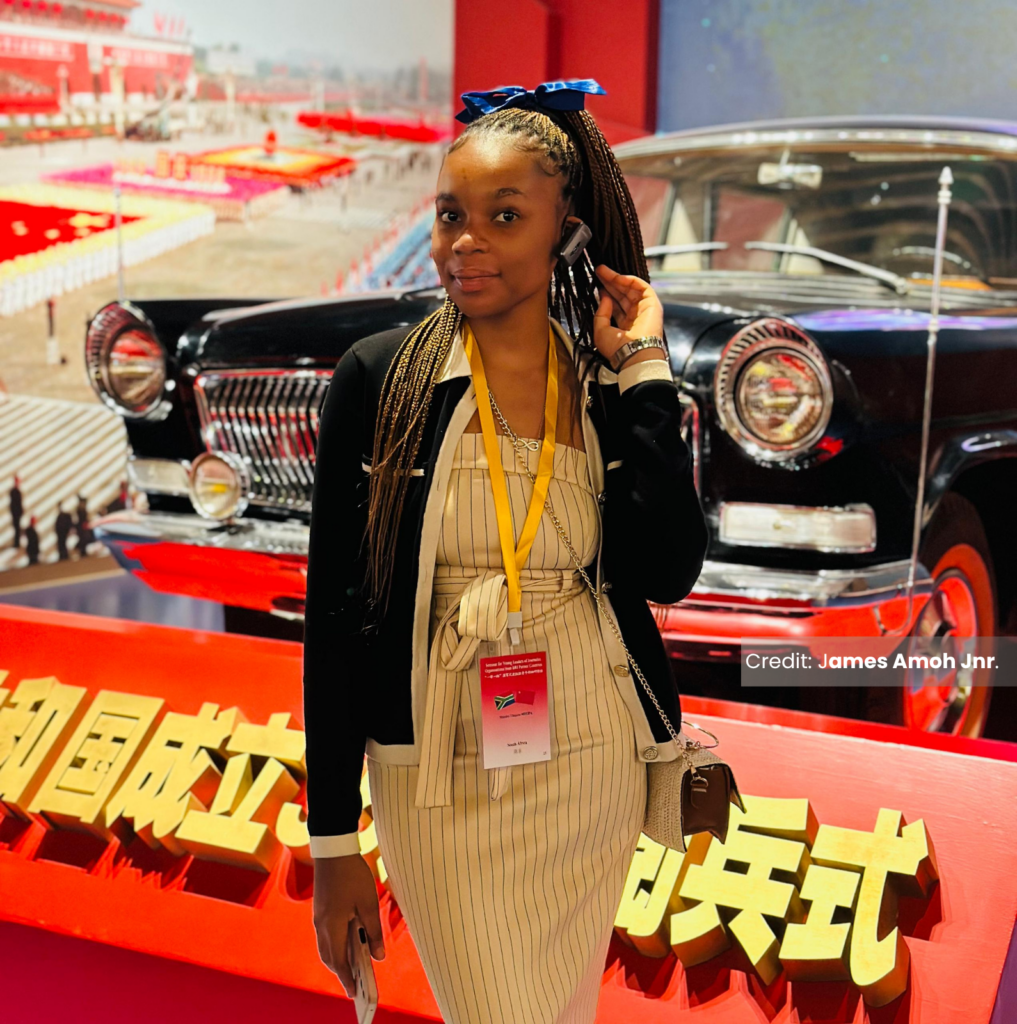
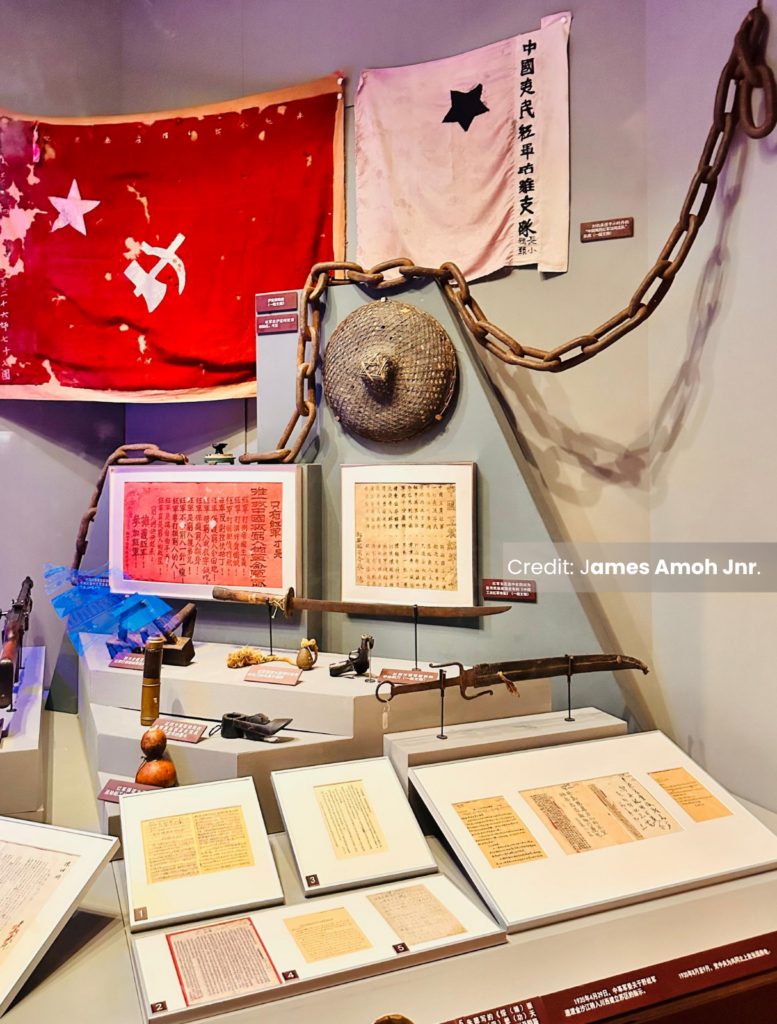

There were no simple conclusions. Some participants emphasised history and solidarity. Others highlighted economic reform, poverty reduction, institution-building or technological advancement.
Together, however, they reflected a broader recognition that China’s development experience is worthy of serious examination rather than simplistic judgement.
At 105, the Communist Party of China has become more than the governing party of the world’s second-largest economy. Its history has evolved into part of a wider global conversation about how nations confront poverty, build resilient institutions and pursue long-term transformation.
For Ghana and many other developing countries, that conversation is not about choosing another nation’s path. It is about asking what enduring principles of governance can help shape their own future.
Perhaps that is the Party’s most significant legacy after more than a century: not that its journey should be copied, but that lasting national transformation demands vision, patience, institutional strength and an unwavering commitment to improving the lives of ordinary people.
GNA
Reporter: James Amoh Junior
Email: [email protected]
Edited by: Samuel Osei-Frempong