By Albert Oppong-Ansah
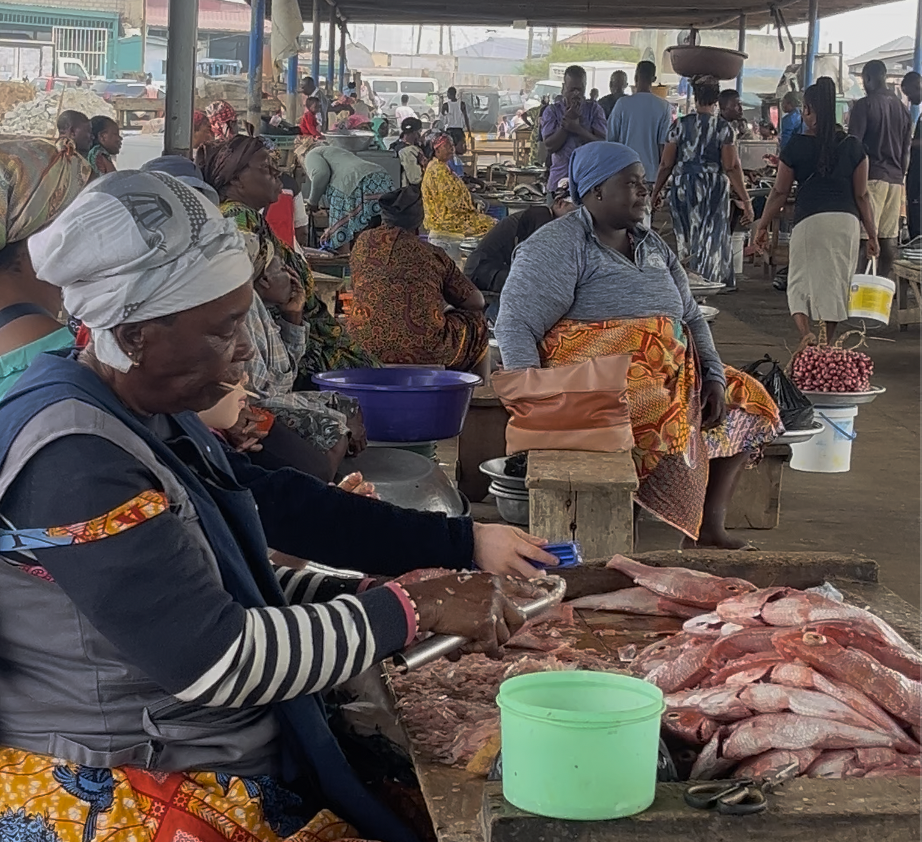
Accra, July 15, GNA – It is another busy Friday afternoon at Makola Market Gifty Gyan, a civil servant, is making a quick stop to buy fish before heading home for the weekend.
She picks up smoked mackerel and a piece of tuna, smells them, negotiates briefly with the vendor, and places them in her tote bag.
But Gifty does not ask where the fish was caught, who caught it, or whether the vessel that hauled it from the sea was even operating legally.
She has never had a reason to.
Perhaps she should.
“All I want is freshly smoked fish at a moderate price,” Gifty, a mother of five, tells the Ghana News Agency (GNA) at the market.
She represents millions of Ghanaian consumers who rarely think about the journey fish takes before reaching their plates, how it was harvested, handled, or whether it was caught sustainably.
That, however may soon change.
What you do not know about your fish
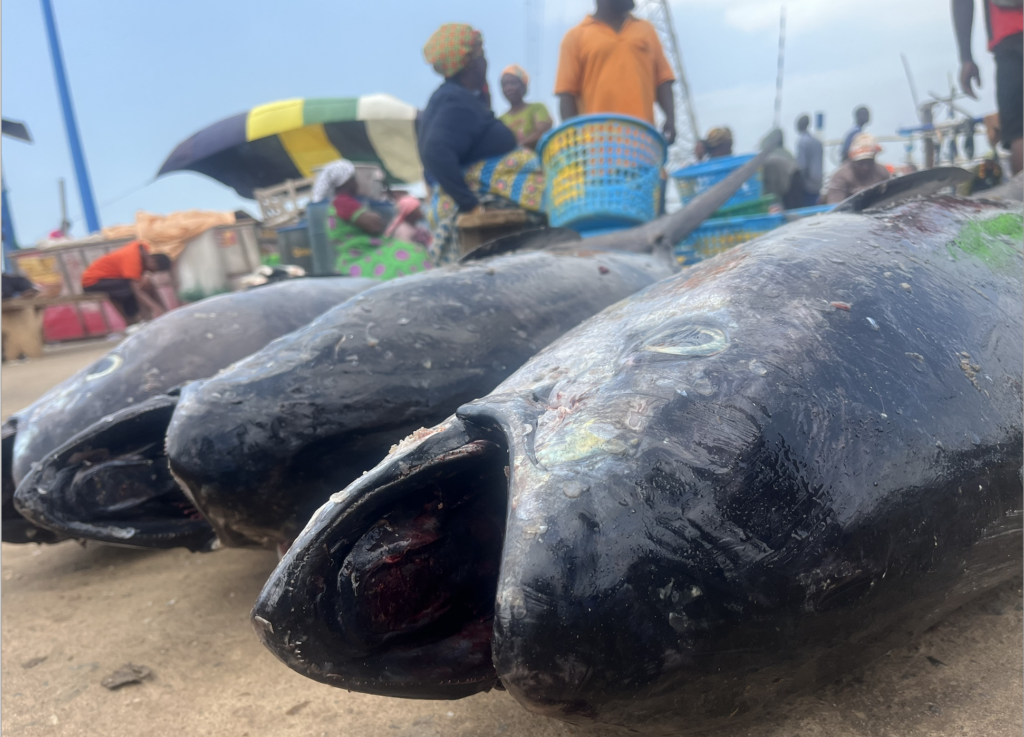
Ghana is a fish-eating nation. Per capita fish consumption here is among the highest in sub-Saharan Africa, with six out of ten homes in the country eating fish, as source of animal protein.
Mackerel and tuna on the grill, fried barracuda in soups and stews, fish is not a luxury in Ghana.
It is a staple.
Papa Yaw Atobrah, a fisheries expert with more than 40 years of experience in the sector, says the journey from net to dinner plate passes through a system most consumers know almost nothing about.
“Who is allowed to fish in Ghana’s waters, how much they are permitted to catch, whether they are actually following the rules, and whether the fish arriving at markets today will still be there for the next generation,” he told the GNA.
“It is a matter of accountability. Policy makers are holding these resources in trust for the people. Knowing the fish stocks and the number of vessels exploring them is how we know they are doing their job.”
That accountability and transparency gap is exactly what the Fisheries Transparency Initiative (FiTI) was designed to close.
An intent, a commitment, a multi-stakeholder group
Ghana formally committed to the FiTI, a global multi-stakeholder endeavour to enhance the sustainability of marine fisheries, when then-Minister of Fisheries and Aquaculture Development (MoFAD), Hawa Koomson presented the country’s endorsement to the FiTI board in Rome in 2024.
Current Minister for Fisheries and Aquaculture, Emelia Arthur later oversaw the formal signing and established a National Multi-Stakeholder Group, known as the NMSG, to translate the intent and the commitment into action.
A transparency assessment conducted in Ghana revealed significant volumes of fisheries information that existed within government but remained scattered and inaccessible to the public.
The commitment matters, says Dr. Godfred Ameyaw Asiedu, FiTI Regional Coordinator for Anglophone Africa.
FiTI, he says requires governments to publish who holds fishing licences, vessels that fish in Ghana waters, how much fish is caught and reported, and how enforcement against illegal fishing is performing.
“The idea is simple: if citizens have access to the data and information, they can hold the system accountable,” Dr. Ameyaw tells the GNA.
However, inadequate funding remains a major challenge to the effective operation of the NMSG.
A FiTI Lead Ministry and a National Focal Point have been appointed to oversee NMSG activities, Terms of Reference (ToR) have been approved and a workplan for the NMSG developed.
“We could have done more if we had adequate funding,” Dr. Ameyaw acknowledged.
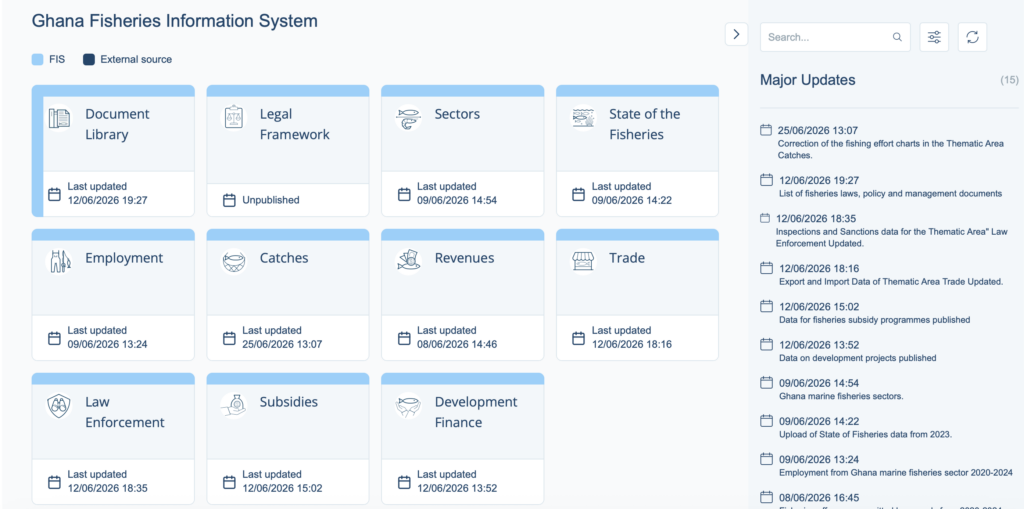
“The NMSG has supported the ministry to develop an online Fisheries Information System which was launched in June, this year during the Our Oceans Conference in Kenya. This will enable the public, and people globally, to access key information on Ghana’s marine fisheries sector.”
For consumers waiting at the fish counter, however, that transparency has yet to arrived.
Why consumers should care
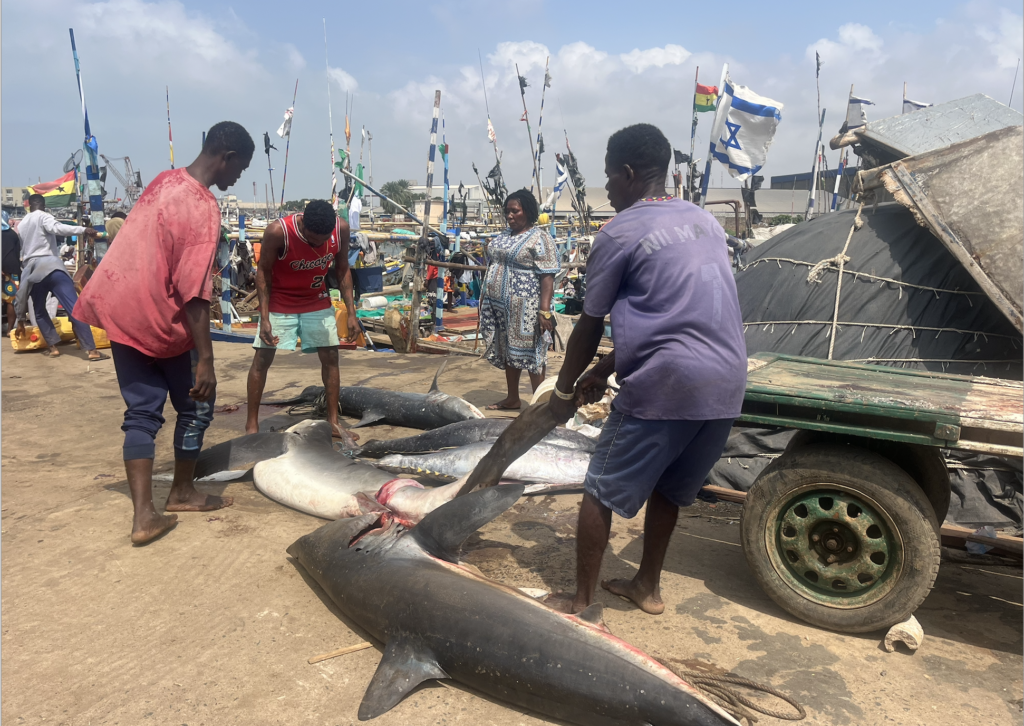
The connection between fisheries governance and the price and availability of fish at the market is direct, even if it is invisible to most consumers.
Ghana and other developing countries are losing billions of dollars due to Illegal, Unreported and Unregulated (IUU) fishing, which siphons off revenue through illicit financial flows, according to a new study by the Financial Transparency Coalition (FTC), a global network of organizations working on illicit financial flows.
Mr Ernest Arthur, a fisherman, in Takoradi tells GNA that, “When industrial vessels fish in unlicensed zones means entering waters where you have no permission to fish. Using small nets means catching young fish before they have grown and reproduced, robbing the ocean of its next generation”
“Fishing with light means using bright lights at night to attract and scoop up massive quantities of fish in one go. And falsifying records means writing lies in official logbooks to hide all of the above. Together, these practices strip the ocean faster than it can recover
Fish from these practices is brought to the same market, to be sold, he notes.
The catch eventually get to the market, in higher prices, smaller fish, and species that quietly disappear from the display, he says.
Economics are straightforward, even if the consequences are not. A vessel that ignores fishes in protected zones, or uses fine-mesh nets that scoop up juvenile fish bears lower operating costs than one that follows the rules.
Those savings are passed down the supply chain, landing eventually in the price Gifty pays at Makola Market.
“Consumers feel the effects of illegal fishing every time they go to market,” he says.
“They just do not connect the dots between a missing species and what is happening offshore.”
He says the country’s fish catch has declined significantly over recent decades.
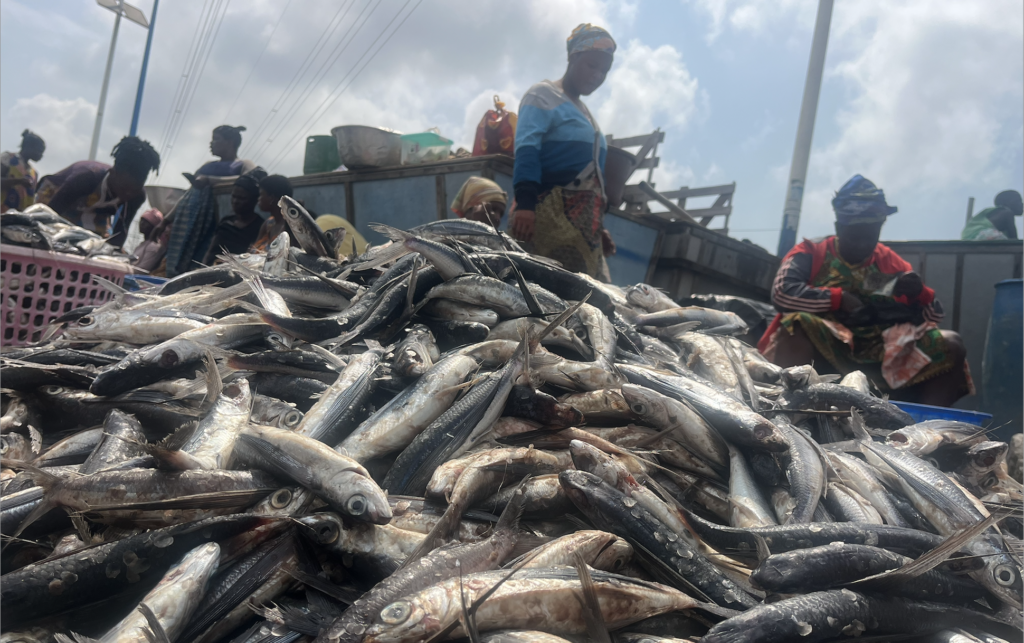
The sardinella, Dr Agyekumhene locally used to prepare the “Fante Fante,” a delicacy sauce along the coast of the Central and Western regions, once the cheapest and most abundant fish in coastal markets, has become noticeably scarcer and more expensive.
For every ten sardinella swimming in Ghana’s waters three decades ago, only two remain today, according to the Environmental Justice Foundation, with the FAO warning the fishery is near total collapse.
What was a food for everyone is increasingly becoming a food for those who can afford it, he note.
“What we are seeing now with sardinella is the cost of doing nothing,” Dr. Agyekumhene says. “FiTI is not about making fish expensive. It is about making sure there is still fish to buy.”
The information the public cannot access
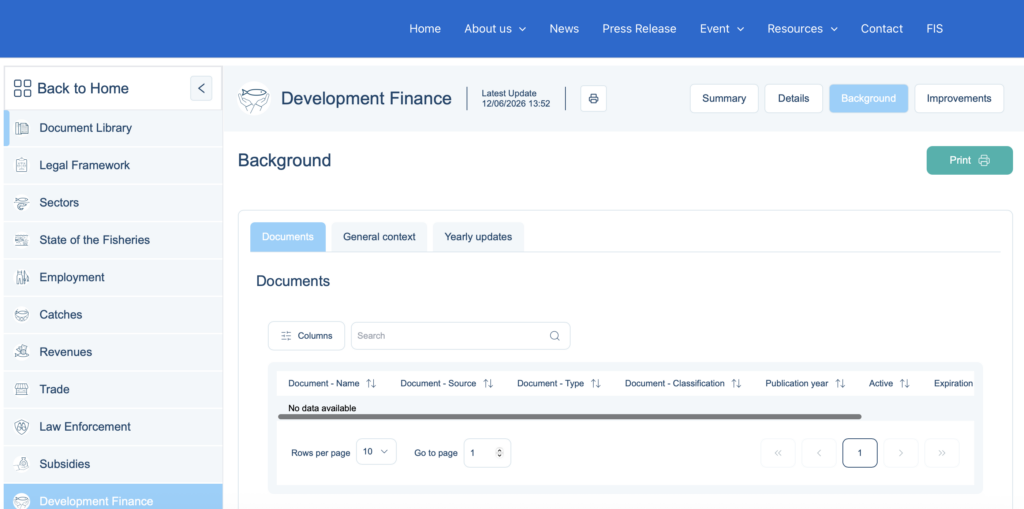
The FiTI Standard requires that available fisheries data and information are published and publicly accessible and understandable to ordinary citizens, not buried in government databases or published in technical language that requires a degree to decode.
Mr Philip Prah, an official of Friends of the Nation, a local based non-governmental organisation states that Ghana’s progress has been uneven on that measure.
He says that key datasets including a comprehensive public vessel registry showing who is licensed to fish in Ghanaian waters, have not been published in a form that meets FiTI’s transparency standards.
“That means that right now, a curious consumer, a market trader, a journalist, or a concerned parent cannot easily look up whether the company supplying fish to their local market holds a valid license, whether it has been flagged for violations, or how its reported catches compare to what is arriving at the docks,” he says.
Mr Prah, who is a member of the NMSG, says earlier assessment has shown that some of such information exists somewhere but not accessible.
“Even if it becomes handy, government must support the NMSG to create awareness among the public,” he adds.
Funds from vessels fines could be used to support the NMSG.
A Lesson from the Seychelles
The Seychelles have earned the reputation of being the first ever country with FiTI compliance status
Ms Nathaniel Morel, the Program Development Officer at the Blue Economy Department, at the Ministry of Fisheries, Agriculture, and Blue Economy, Seychelles tells GNA it was a result of making information accessible.
“The compliance status means that we have most of our information out there on website. Technical information, reports, activities have been broken-down and disseminated on social media, media in short videos, and other forms of content to meet the needs of different groups,”
“For instance, there are reels that answers questions like how many people work in the fisheries sector? How big the fishes should be? How many vessels are in the sector?, These are shared for the everyone” she says.
Ms Morel who also works at the FiTI National Secretariate say that through the funding from the government NSG has ensured that stakeholders including consumers, fishermen, processors, vessel owners in the sector know where to channel their concerns should there be.
Funding was a problem but the government (Seychelles Fisheries Authority) stepped in to support NMSG of Seychelles to undertake its work.
Ghana’s funding puzzle
Madam Emelia Arthur, Fisheries and Aquaculture Minister tells GNA that government recognised the importance of the sector and that part of the Ministry’s good and service money would be made available to support NMSG activities.
“We are also working with Norway to revive a funding mechanised called fish development fund that has expired to support some NMSG operations. When we said reset, reset also means transparency,” she says.
No timeline was given and this is worrying, Dr. Agyekumhene says. Te uncomfortable question hanging over Ghana’s FiTI commitment, however, is whether transparency will, at least initially, affect the very consumers it is meant to protect.
Stricter enforcement of licensing could reduce the volume of fish reaching markets in the short term, nudging prices upward. But experts argue that the alternative is already playing out.
The sardinella was once the cheapest fish in the market. It is disappearing precisely because no one was minding the catch for decades.
Imagine school canteens, Gifty, and other consumers being able to verify that the fish they buy comes from a legally operating supplier.
The stake on the plate
Back at Makola Market, Gifty Gyan wraps her mackerel in newspaper before heading home.
Asked whether she would want more information about where her fish comes from, she pauses.
“If it means my children will still have fish to eat in ten years, then yes,” she says.
“Tell me what I need to know.”
For Dr Agyekumhene, Gifty’s response captures the purpose of Ghana’s commitment to implement the FiTIStandard.
He said transparency was not only about publishing data but ensuring that information helped citizens understand and participate in decisions affecting a resource that supports livelihoods, food security and the economy.
The country’s fisherfolk, markets, dinner tables and ultimately its food security are waiting for that promise to be fulfilled.
GNA
Edited by Audrey Dekalu
Reporter: Albert Oppong-Ansah
Email : [email protected]
“This story was produced with the support of Internews’ Earth Journalism Network”.