By James Amoh Junior, GNA
Accra, July 03, GNA – Bilateral merchandise and services trade between Ghana and Canada expanded by 56 per cent year-on-year to US$752 million in 2025, signalling a structural shift from aid-based engagement to a more trade and investment-led partnership.
From Development Assistance to Economic Partnership
Ghana and Canada established diplomatic relations in 1957, shortly after Ghana’s independence.
For much of the post-colonial period, the relationship was anchored on Official Development Assistance, ODA, technical cooperation and capacity building in education, health, governance, agriculture, water and sanitation, mining and clean energy.
Over the last decade, the paradigm has changed. Both countries have pursued economic diversification, trade complementarity, and private sector-led growth.
Canada’s Africa Strategy and Ghana’s positioning as host of the AfCFTA Secretariat have provided new frameworks for commercial engagement.
This transition reflects a broader reorientation of Ghana’s external trade policy: from concessional flows to Foreign Direct Investment, FDI, export diversification, and integration into global value chains.
2025 Trade Performance
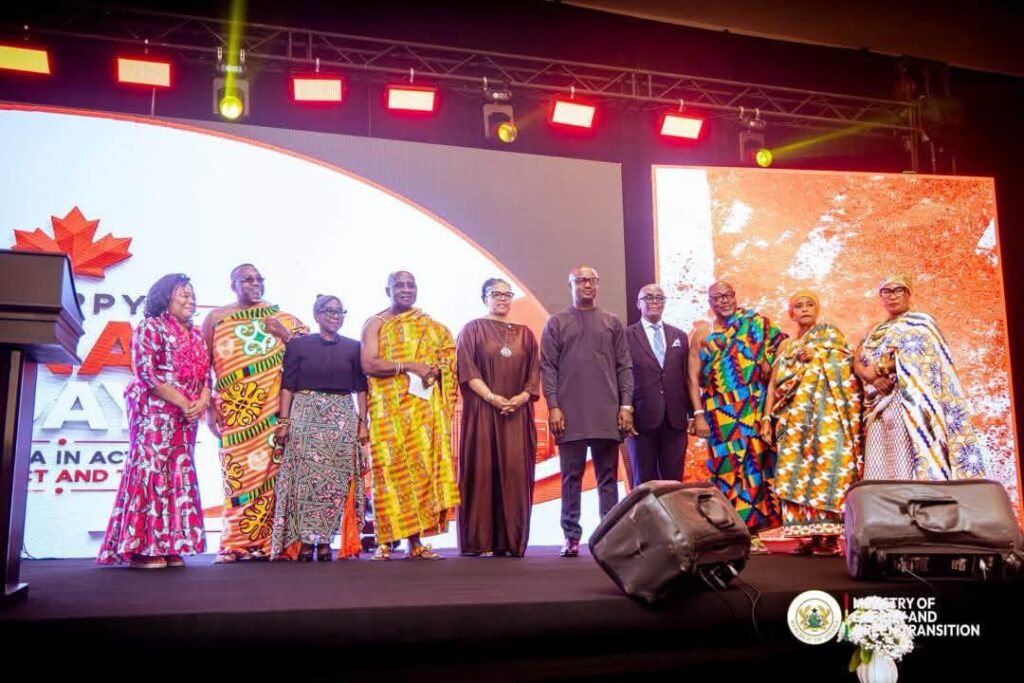
Ms. Myriam Montrat, the Canadian High Commissioner to Ghana, announced the figure at Canada’s 159th National Day reception in Accra.
“Through trade and investment, Canadian companies are contributing expertise, technology and innovation to Ghana’s development.
In 2025, trade between Canada and Ghana reached US$752 million, a 56 per cent increase,” she said.
The High Commissioner said the growth reflected increasing trade intensity and demonstrated latent demand for deeper commercial relations.
She announced that Canada would host an Investment Summit later this year to de-risk and showcase opportunities to international investors, including Ghanaian firms.

Trade Composition and Comparative Advantage
The bilateral trade basket shows inter-industry trade based on factor endowment differences.
Canada’s export profile to Ghana is weighted toward higher value-added manufactures: cereals, machinery, transport equipment, pharmaceuticals and industrial products.
Ghana’s export profile to Canada remains concentrated in primary commodities: cocoa and cocoa products, gold, soya beans and other agricultural commodities.
This pattern underscores complementary economies with scope for intra-industry trade and value chain upgrading, particularly in agribusiness processing, renewable energy components and digital services.
AfCFTA and Market Access Dynamics
Both countries are seeking to leverage the African Continental Free Trade Area, AfCFTA, whose Secretariat is headquartered in Accra.
Ghana’s role as the gateway to a continental market of 1.4 billion people is expected to improve Canada’s market access and reduce effective protection rates for Canadian investors. Priority sectors identified for capital inflows include agribusiness, renewable energy, manufacturing, digital technology, infrastructure and responsible mining.
“The AfCFTA creates a new investment thesis for Canada in West Africa,” Dr. John Abdulai Jinapor, the Minister for Energy and Green Transition, said.

From Aid to Investment: Policy Shift
Dr. Jinapor said Ghana welcomed the evolution from development cooperation to a dynamic, mutually beneficial commercial partnership anchored on trade, investment, innovation and sustainable economic growth.
He noted that collaboration in agribusiness, renewable energy, digital transformation, responsible mining, manufacturing and infrastructure offered strong employment multipliers and prospects for inclusive growth.
“The longstanding partnership has contributed to Ghana’s development through cooperation in trade, mining, clean energy, water supply, agriculture, science, education and technical assistance.
We are now pursuing a relationship based increasingly on commercial viability, technology transfer, and capital formation,” he said.
Outlook
Beyond trade, both countries reaffirmed commitments to cooperation in peace and security, climate action, education and multilateral engagement.
With bilateral trade at a record high and policy alignment on AfCFTA, analysts expect further trade creation effects, higher FDI stock, and increased South-North value chain integration in the 2026-2030 period.
GNA
Reporter: James Amoh Junior
Email: [email protected]
Edited by Samuel Osei-Frempong