By Stephen Asante
Accra, July 17, GNA– The High-Level Regional Convening on the Financialisation of Politics in Africa has adopted the Accra Declaration, prescribing reforms for accountability in political financing.
To sustain implementation, delegates committed to strengthening the Community of Practice as the continent’s platform for dialogue, peer learning, civic education, knowledge exchange and advocacy on money in politics.
The Accra Declaration upholds citizens’ right to know who finances political actors, how political resources are used, and whether political decisions are influenced by private interests.
It calls for more inclusive political participation, and the use of technology to promote transparency, accountability and democratic oversight.
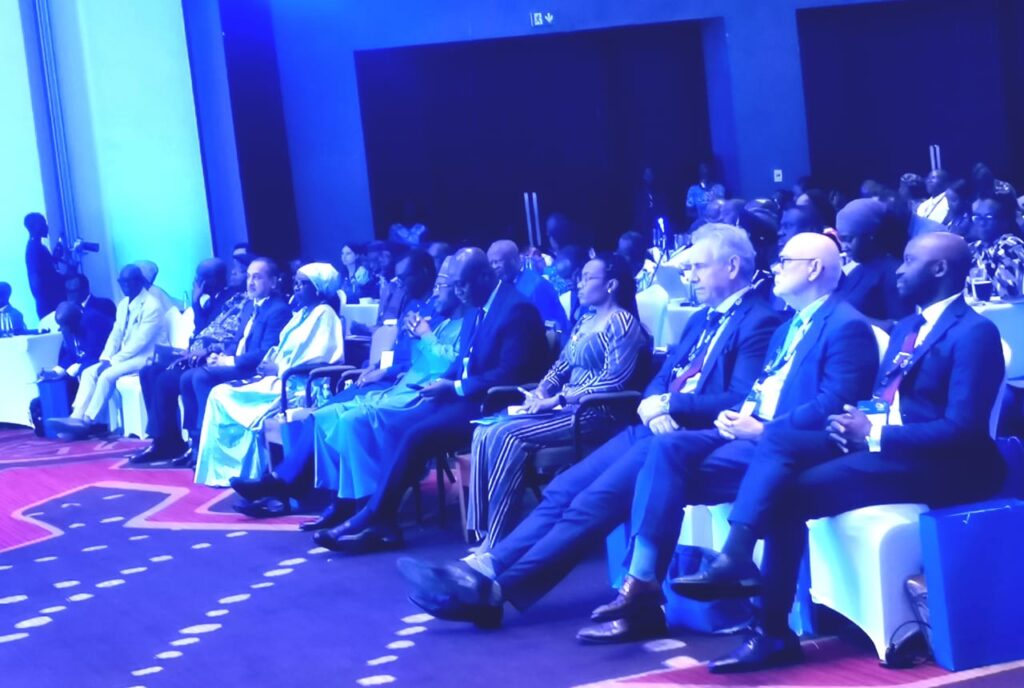
Emerging from the Dakar Roundtable and UNCAC Resolution 11/7, the High-Level Convening brought together researchers, electoral bodies, Members of Parliament (MPs), government officials, and civil society actors from across Africa.
The African Union Advisory Board Against Corruption (AUABC), the Community of Practice on Political Finance in Africa, CDD-Ghana, Open Society Foundations, and Transparency International jointly organised the programme to improve political finance systems across Africa.
The objective was to examine the impact of political finance on democracy and explore pathways towards greater transparency, accountability and integrity.
Building on three days of dialogue, evidence sharing, and collaboration, the delegates translated key insights into reform commitments and adopted the Accra Declaration as a collective step towards advancing political finance reforms.
Among other things, the Declaration advised that democracy should serve citizens rather than donors, urging political systems to be accountable to the people through participation, representation and public service.
The delegates raised concerns that opaque political financing, rising campaign costs, corruption, illicit financial flows, state capture and unequal access to political participation were weakening democratic governance.
That, they observed, was eroding public trust across the continent.
The delegates endorsed political finance regulation and enforcement while safeguarding transparency, political freedoms and democratic competition.
Earlier in an address, Mr Kwame Edem Senanu, Chairperson of the African Union Advisory Board Against Corruption, hinted that the Board was liaising with some technical committees to develop a model political financing law for the continent.
The idea, he said, was to enable Member States to enact policies in dealing with the threat that financialisation of politics posed.
“It will take the processes in Member States to produce those laws, taking into consideration their own legal frameworks, and enforce them for us to begin to see results,” he added.
Dr Mohamed Ibn Chambas, the African Union High Representative for Silencing the Guns in Africa, in a keynote address, congratulated delegates on the milestone, but cautioned that implementation would determine its success.
“I congratulate you most warmly. But permit me, gently, a caution at the outset: on our continent, adopting declarations is the easy part.
Africa’s archives are heavy with eloquent commitments. What will distinguish Accra is not what we proclaimed at midday on the sixteenth of July, but what we can prove by the eleventh of July next year, when the first continental scorecard falls due,” he noted.
He appealed to governments and parliaments to enact meaningful reforms, saying “nothing tests statesmanship more severely than legislating transparency into the very system that brought you to power.”
GNA
Reporter: Stephen Asante
Email: [email protected]
Edited by Samuel Osei-Frempong