Credit: Solomon Gumah, GNA
Sagnarigu (N/R), June 24, GNA – Students of Sagnarigu Model Girls Junior High School in the Northern Region have petitioned the Sagnarigu Municipal Assembly to urgently address critical water, sanitation and security challenges affecting teaching and learning at the school.
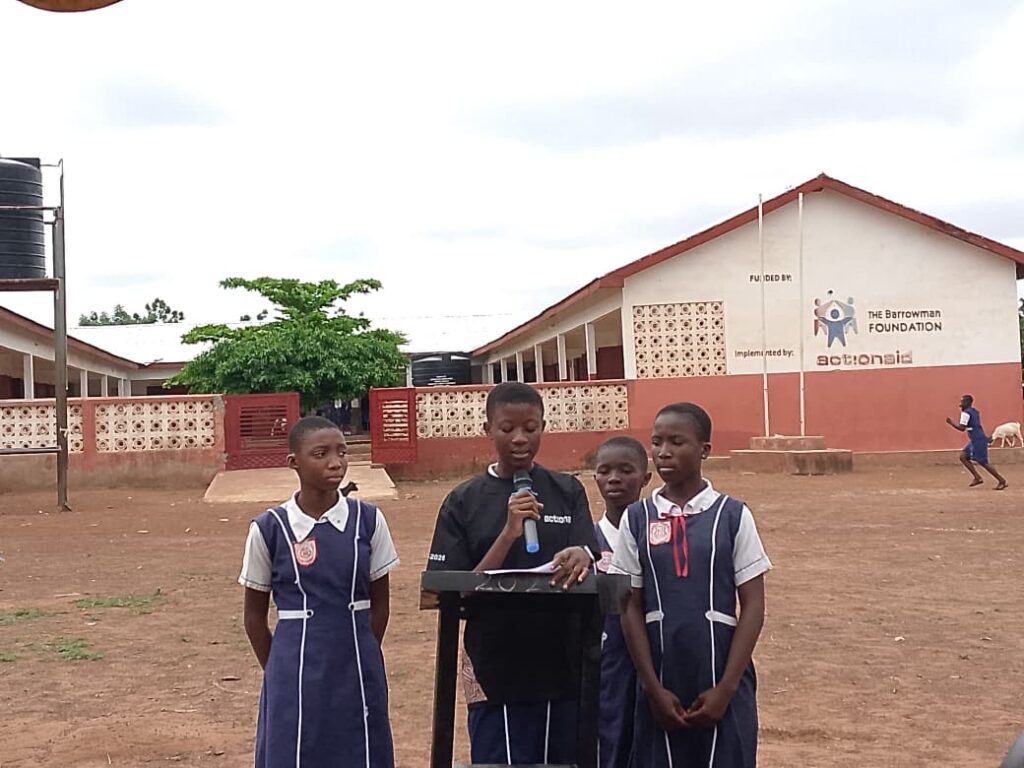
The petition was presented during the commemoration of this year’s International Day of the African Child, organised by the Northern Regional Programme Office of ActionAid Ghana among other partners.
Miss Angela Kudjo Asuo, School Prefect of Sagnarigu Model Girls Junior High School, who read the petition on behalf of her colleagues,said the school’s persistent lack of clean water, inadequate sanitation facilities and poor waste management systems were negatively affecting the health, education and dignity of students particularly adolescent girls.
She said despite the school’s population of about 200 students, it had no reliable source of water explaining that water storage tanks installed at the school had remained non-functional since the establishment of the institution.
She said the school depended solely on water supplied by the Parent-Teacher Association, which was delivered only once every academic term and was insufficient to meet the needs of students.
She said “The absence of a reliable water source has resulted in persistent unhygienic sanitation facilities. Without water, toilets cannot be properly cleaned and handwashing becomes impossible.”
Ms Asuo said the situation was especially challenging for adolescent girls, who often struggled to manage menstrual hygiene with privacy and dignity, exposing them to health risks and contributing to school absenteeism.
She highlighted poor waste management practices at the school and said the shortage of covered refuse bins had led to indiscriminate littering and unsanitary conditions within the school compound.
She expressed concern that some students were often required to collect waste with their bare hands exposing them to harmful pathogens, sharp objects and contaminated materials. “This practice is unsafe and undignified. It places students at risk of infections and injuries and undermines our well-being as learners.”
The students also raised concerns about the school’s uncompleted perimeter wall, which they said had left the compound vulnerable to intrusion by some community members, who allegedly entered the premises at night to engage in open defecation.
They said the practice had created serious health and environmental concerns, exposing students to diseases such as cholera, typhoid and other sanitation-related infections.
They argued that the challenges were inconsistent with the objectives of Sustainable Development Goal Six (SDG 6), which seeks to ensure access to clean water and sanitation for all, and called for urgent intervention.
The petition appealed to the Municipal Assembly to provide a mechanised borehole with a storage facility or underground tank to ensure a reliable all-year-round supply of potable water.
The students also requested the provision of durable covered waste bins at strategic locations across the school compound and the completion of the perimeter wall to enhance security and sanitation.
They stressed that access to clean water, safe sanitation facilities and a secure school environment were basic necessities rather than privileges and were essential to promoting girls’ education and empowerment.
Mr Abdulai Imoro Gong, Sagnarigu Municipal Chief Executive, who received the petition, assured the students that the Assembly would act swiftly to address their concerns.
He acknowledged the importance of water and sanitation facilities in improving educational outcomes and pledged the Assembly’s commitment to supporting the school.
Mr Gong announced that the school would receive a mechanised borehole by the end of September, this year, to help address its water challenges.
He said the Assembly would also work assiduously with relevant stakeholders to address the other concerns raised in the petition to ensure a conducive learning environment for the students.
The International Day of the African Child is commemorated annually to promote the rights and welfare of children across the continent while drawing attention to challenges affecting their development and well-being.
This year’s celebration provided a platform for students to amplify their voices and advocate for improved access to essential services necessary for quality education and healthy living.
GNA
Edited by Eric K Amoh
Email: [email protected]