By Kekeli K. Blamey
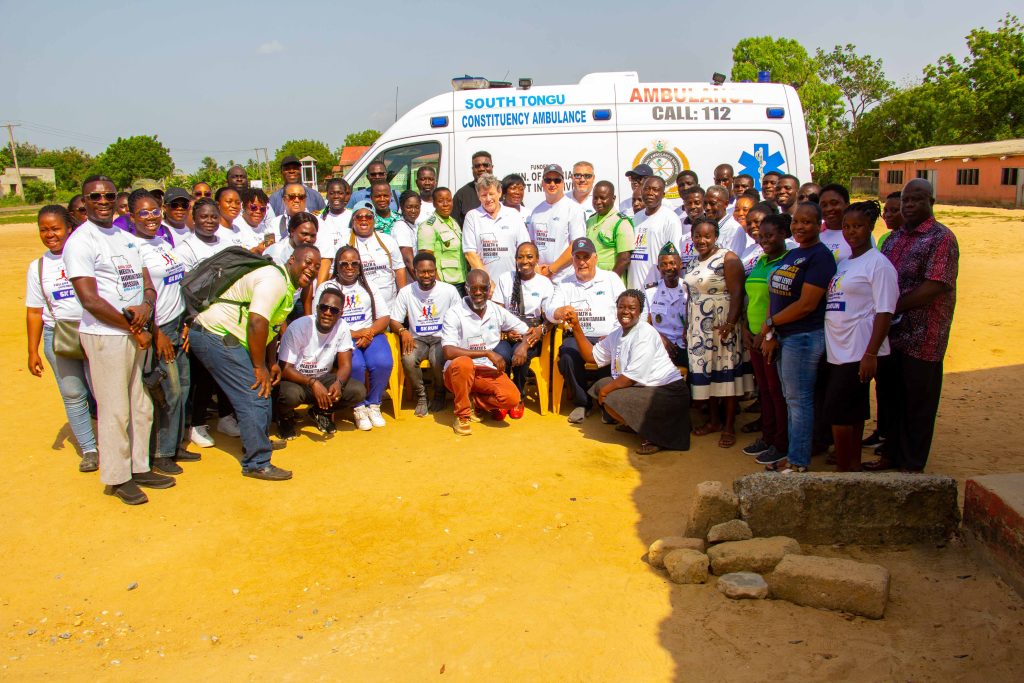
Adutor (V/R), April 16, GNA — Impact World 360⁰, a health-focused humanitarian organisation, has undertaken a community health outreach at the Adutor Health Centre in the Volta Region, combining free medical screening with emergency response training for motorcycle riders and taxi drivers.
The initiative, led by the Coordinator of the organisation, Ms Nana Adwoa Odeibea Noi, forms part of a broader strategy to strengthen community-based emergency care systems and improve health literacy at the grassroots.
Addressing participants, Ms Noi said the programme was designed to bridge critical gaps in pre-hospital care, particularly in rural communities where commercial transport operators often serve as informal first responders.
She explained that the intervention provided residents with essential health screening services while equipping motorcycle riders and taxi drivers with practical, life-saving first aid skills.
“We have conceptualised this as Community Emergency Response Assistance, recognising that motorcycle riders and taxi drivers frequently function as de facto ambulance services within our communities,” she said.
The training covered key emergency response techniques, including cardiopulmonary resuscitation (CPR), haemorrhage control, safe handling and transportation of accident victims, and appropriate positioning of patients with fractures, stroke symptoms and pregnancy-related emergencies.
Ms Noi noted that the programme sought to empower community members to act effectively during the critical period before professional medical assistance becomes available.
“As we emphasised, you are the help until help arrives. Timely and informed intervention in those first moments can significantly improve survival outcomes,” she stated.
She said the Adutor outreach was the organisation’s second intervention in Ghana, following a similar exercise in Accra, and was deliberately implemented to assess and respond to location-specific health needs.
Preliminary findings from the screening indicated a difference in disease patterns, with higher cases of malaria, anaemia and arthritis recorded in Adutor, while hypertension was more prevalent during the Accra exercise.
“This underscores the importance of context-specific interventions, as health priorities vary from one community to another,” she added.
Ms Noi further disclosed that the Adutor programme was being piloted with the aim of scaling it up nationwide and subsequently extending it to other countries where informal transport systems play a key role in emergency response.
She said the organisation’s international engagements, including programmes in parts of the United States such as Virginia, had largely focused on the screening and management of chronic non-communicable diseases, particularly diabetes and hypertension.
Madam Mavis Agumeh, the District Health Director, commended Impact World 360⁰ for the timely intervention, describing it as a significant complement to the efforts of the Ghana Health Service to improve primary healthcare delivery at the community level.
She noted that integrating health screening with emergency response training addressed a major gap in pre-hospital care, especially in hard-to-reach areas where access to ambulances and trained personnel remained limited.
Madam Agumeh further praised the organisation for targeting commercial riders, who play a critical role in transporting patients during emergencies, saying that equipping them with basic first aid skills would improve survival rates and reduce preventable complications.
She expressed the Directorate’s readiness to collaborate with Impact World 360⁰ to scale up similar interventions in other communities within the district.
Participants, particularly the motorcycle riders and taxi drivers, expressed appreciation to the organisation for the training, noting that the practical skills acquired had boosted their confidence in handling emergency situations.
They said the knowledge gained would not only enhance passenger safety but also enable them to provide immediate assistance to accident victims and other persons in distress within their communities.
GNA
Edited by Maxwell Awumah/Lydia Kukua Asamoah