By Michael Foli Jackidy, GNA
Ho (V/R), March 30, GNA – In the towns and villages of the Volta Region, especially southern part of the region, the unmistakable rhythm of Agbadza, a form of dance lifestyle echoes through the air, drawing people together in moments of grief, remembrance, and celebration.
Social Cohesion
Agbadza functions as a social glue: At funerals, it transforms grief into solidarity, at festivals, it becomes a celebration of life and continuity and across generations, it bridges elders and youth, ensuring cultural transmission and socio-cultural cohesion.
This perspective shows Agbadza as more than entertainment – it is a communal language of belonging, a cultural heartbeat, uniting communities through music, movement, and shared identity and a reaffirmation of communal bonds.
Draped in traditional cloth, dancers move in synchrony, arms gesturing expressively, feet striking the ground in rhythmic precision, as drummers and singers lead an atmosphere charged with emotion and tradition.
Broader cultural lens
Agbadza is shared across borders in Togo and Benin, making it a pan‑Ewe cultural treasure. This cross‑border identity strengthens its role as a unifying heritage beyond national boundaries.
Heritage and Identity
Agbadza is not just a performance – it is a living archive of Ewe history. By tracing its roots from Atrikpui, an ancient war dance performed by warriors before and after battles to today’s communal ritual, the feature can emphasize how the dance embodies resilience, courage, and collective memory. This positions Agbadza as a cultural mainstay that continues to define identity in southern Volta and beyond.
It was a medium of psychological preparation, instilling courage, unity, and resilience among fighters heading into uncertain confrontations.
Over time, as warfare gave way to more settled community life, Atrikpui evolved into Agbadza, transforming from a battlefield ritual into a social and cultural performance that now embodies storytelling, reflection, and celebration of life.
Spiritual Dimension
The invocation of ancestors before performances reflects the spiritual depth of Agbadza. It is not only rhythm and movement but also a ritual of connection between the living and the departed. This underscores its role as a cultural practice that sustains spiritual identity.
Drum arrangement
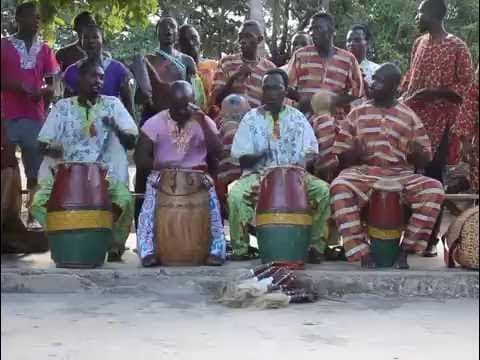
Central to Agbadza is its rich musical arrangement, a carefully coordinated ensemble of drums and percussion instruments.
The Sogo, the lead drum, commands the rhythm and directs the flow of the performance. Supporting it is the Dadedzi drums, which reinforce the base rhythm, while the sharp, high-pitched Kaganu adds texture.
The metallic resonance of the Gakogui (gong) and the rattling Axatse complete the ensemble, creating a layered and immersive soundscape.
But Agbadza is more than drumming and dance; it is also a powerful vocal tradition. Songs are integral, carrying messages of history, bravery, satire, and social commentary.
They energised performers and connected audiences to shared experiences and values.
Mr Hope Dzorgba, a seasoned traditional drummer, told the Ghana News Agency that the roots of Agbadza as Atrikpui highlight its enduring significance.
“In the olden days, it was not just entertainment. It was a source of strength for warriors. The rhythm gave them courage and pushed them forward, even in difficult times,” he said.
Mr Shine Kpogo, a lead singer, explained that every Agbadza performance begins with a symbolic invocation of the ancestors, a spiritual act seeking permission and blessings.
“Once the ancestors are invoked, everything falls into place. The drums, the songs, and the dancers all move in harmony. The rhythm guides the singer, and the songs follow a structured pattern,” he said.
According to Mr Kpogo, many Agbadza songs are deeply rooted in the ‘Efa’ tradition, drawing from spiritual narratives and ancestral wisdom that enriches the meaning behind the performance.
For the youth, Agbadza remains a strong symbol of cultural identity. Mr. Freedom Estey Lavoe, popularly known as Zigato, a native of Klikor now living in Accra, said the sound of the drums instantly reconnects him to his heritage.
“Whenever I hear Agbadza, no matter where I am, I feel energised. It reminds me of home and who I am,” he said.
Madam Lydia Nyarko Ampomah, Volta Regional Director of the Centre for National Culture, described Agbadza as a cultural treasure shared across borders, including parts of Togo and Benin.
She noted that the dance had evolved into a vibrant cultural expression symbolising freedom, creativity, and storytelling, while still preserving elements of its warrior origins.
Agbadza performances are traditionally structured into five segments: Banyinyi (introductory prayers), Vutsortsor (the main dance), Adzo (a more relaxed phase), Hatsatsa (historical and narrative songs), and a final Vutsortsor to conclude the performance.
Madam Ampomah said the Centre continued to promote Agbadza through cultural festivals such as the Hogbetsotso Festival, educational programmes in schools, and performances by cultural troupes, including the Volta Regional folkloric group.
“Our aim is to preserve this rich heritage and ensure that Agbadza is appreciated beyond funeral grounds as a symbol of identity and pride,” she said.
As the rhythms of Agbadza continue to resonate across generations, cultural advocates are calling for a renewed appreciation of its origins and broader significance.
Beyond the solemnity of funerals, the dance stands as a living archive of Ewe history, a vibrant expression of resilience, unity, and cultural pride that continues to define the spirit of southern Volta.
Perspective takeaway
Agbadza is a dance of dualities – born from war yet now a symbol of peace, rooted in grief yet celebrated in joy, ancient yet alive in modern contexts. It is a cultural heartbeat that continues to affirm Ewe resilience, unity, and pride.
GNA
Edited By: Maxwell Awumah/George-Ramsey Benamba