By Joseph Agrace Wiyorbie
Wa (UWR), Oct.10, GNA – The Ghana Centre for Democratic Development (CDD-Ghana), in partnership with the Centre for Advancing Rural Opportunity (CARO-Ghana), has engaged young people in the Wa West and Sissala West Districts towards preventing violent extremism.
The engagement dubbed: “District Democracy and Governance Learning Youth Cafe Convenings,” was to equip the young people with the knowledge and skills to actively engage in local governance processes, decision-making and leadership.
It formed part of the “Enhancing Social Cohesion and Social Contract, Through the Empowerment of Women and Youth in three Northern Regions of Ghana” project implementation by CDD-Ghana funded by the UN Peacebulding Fund (PBF) through the UNDP and UNFPA.
Young people from the PBF communities-Oli, Kpilla and Dorimon in the Wa West District, and Jeffisi, Fielemo, and Zini in the Sissala West District, as well as youth groups and political party representatives in those districts participated in the engagement.
The engagement was to provide a platform for selected women and youth to learn community mobilisation and activism, networking, and coalition building.
It was also to expose them to non-violent political participation, civic engagement practice, policy influencing strategies, and promoting social cohesion, peace and security.
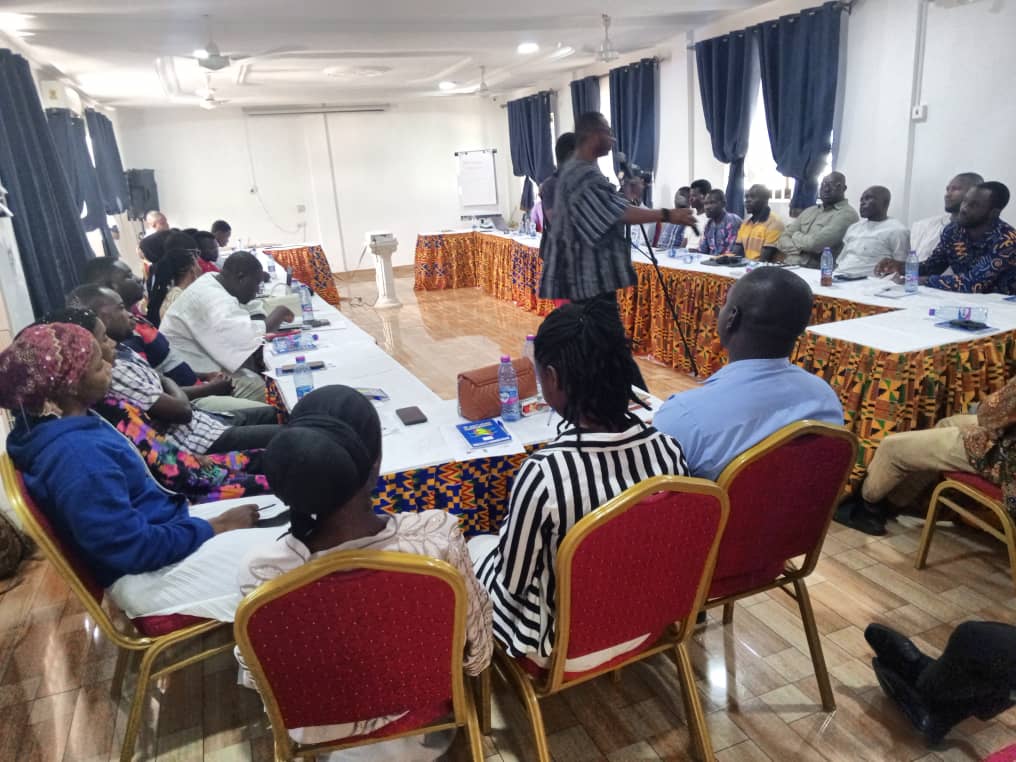
At the workshop in Wa, Mr Freeman Kanton, the Executive Director of CARO-Ghana, said the engagement was necessitated by a growing apathy and low participation of youth and women in governance processes at the local level.
“The youth constitute majority of our population, yet their voices are missing in key decision-making processes.
This training is therefore to build your capacity to participate meaningfully and hold duty bearers accountable,” Mr Kanton explained.
In a presentation, Mr Eric Doe, the Programmes Officer at CDD-Ghana, Tamale office, observed that young people played a vital role in ensuring good governance and sustainable development, and addressing development issues such as unemployment and conflicts.
He said local government structures were, therefore, expected to enhance citizens’ participation in local governance.
Mr Doe added that their effective participation in governance helped build consensus, enhanced public trust, and ensured decisions reflected the needs of communities.
The participants were taken through civic and political rights and responsibilities of the Ghanaian citizens, and preventing violent extremism, non-violent political engagement, peace and security.
Mr Victor Nuworkpor, the Upper West Regional Director of the National Commission for Civic Education (NCCE), said active citizenship was necessary for building sustainable democracy.
“Citizens can directly shape government by running for office or by engaging in advocacy to influence those already in power,” he indicated.
Mr Salifu Anas, a youth leader from Dorimon, commended CDD-Ghana and its partners for the continuous engagement with young people through the PBF project, which had strengthened community participation in governance.
He said the engagement had empowered them to monitor and ensure the development needs of the community were incorporated into the district’s development plan, and to hold duty bearers accountable to their implementation.
The project sought to prevent and address the root causes of localised and spillover conflicts and vulnerabilities to violent extremism in northern Ghana.
GNA
Edited by Caesar Abagali/ Christabel Addo