By Prince Acquah, GNA
Cape Coast, Sept 13, GNA – The Central and West African Virus Epidemiology for Food Security (WAVE), an agriculture-focused organisation, has sounded the alarm on a looming invasion of the Cassava Brown Streak Disease (CBSD) in Ghana.
It has therefore called for reinforced surveillance to ward off the viral disease which posed a significant threat to cassava production and food security in Ghana, urging all stakeholders including farmers, Agric officials and manufacturers to be on high alert.
Dr Allen Oppong, the Coordinator for WAVE in Ghana, called on the Plant Protection and Regulatory Service (PPRS), the body in charge of diseases at the borders, to subject all imported cassava stems to strict inspection and certification.
“They should be vigilant to ensure that infected plants are not imported into the country because some farmers import cassava stems without going through the formal process of certification.
“The PPRS should ascertain whether the stems are certified and clean and coming from a country where the disease is not recorded. Otherwise, they should just seize it and destroy them,” he said.
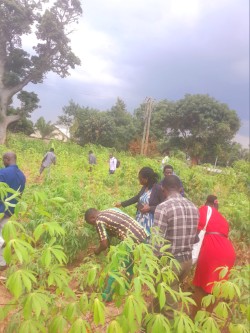
Dr Oppong, who is also a Principal Research Scientist at the Council for Scientific and Industrial Research (CSRI) Crop Research Institute (CRI) in Kumasi, sounded the caution at a workshop for regional and district Agric officials from the Central and Western Regions, on the continuous monitoring of cassava viral diseases.
He said Ghana was already battling the endemic viral Cassava Mosaic Disease (CMD) which discoloured and deformed the leaves of the plant and affected its yields.
The CBSD, on the other hand, gave the cassava leaves a yellowish colour, dark brown streaks on the stem, and devastated the tubers with a brown, dry and hard rot, he said.
Dr Oppong explained that symptoms of the disease show about six months after planting, and it caused cassava constriction and reduction in size.
Though endemic in East and Central Africa, the disease is not yet in Ghana, hence the need for robust systems to prevent it.
Experts say the two viral diseases continue to deny many countries 40 to 100 per cent of yields, posing real threat to food security and economic stability, particularly as cassava fed 800 million people across Africa.
The workshop, therefore, aimed to train participants to generate comprehensive data to support decision making in the fight against the viral diseases, particularly CBSD using the Kobocollect App, a data collection and reporting mobile application.
The officers were sent to the field to have a practical experience and appreciation of how the application works.
Dr Oppong stressed the need to sensitise the public about the disease, to enable them report promptly for timely remedial interventions.
“Farmers must know the nature of the disease in order to report it, and officers must encourage farmers to report changes to crops as soon as possible,” he said.
He also advised importers of cassava stems to be very cautious and pay attention to their country of origin because bringing infected plants into the country could lead to a spread of the disease nationwide.
Dr Oppong however said although the disease does not directly affect the health of humans, it had a negative impact on productivity and food security.
Dr Peter Omega, the Central Regional Agriculture Director, reiterated the importance of cassava to food security, the economy and the pharmaceutical industry, stressing the need to protect the plant from any adverse effect against it.
He noted that Ghana was 140 per cent sufficient in cassava production, producing 26 million tonnes in 2022 alone, adding that cassava production was a lucrative venture the youth must explore.
“This position, which the country sought to improve even further, remained threatened by diseases and pests,” he stated.
Dr Omega advocated for support for agriculture officers, farmers, and even students to be properly empowered and resourced, to be able to fight the threats to cassava production.
GNA
Edited by Alice Tettey / Christabel Addo