Accra, Aug. 7, GNA – Wednesday’s tragic helicopter crash in the Adansi Akrofuom District of the Ashanti Region, which claimed the lives of two Cabinet Ministers and several other high-ranking government and soldiers, has brought national attention to aviation safety in Ghana.
Preliminary investigations have commenced to unravel the cause of the crash, although eyewitness accounts have attributed the incident to poor weather conditions.
The crash, which occurred on August 6, 2025, involved a military helicopter transporting a government delegation to an official assignment in Obuasi.
Among the victims were Dr Edward Kofi Boamah, the Minister of Defence, and Dr Ibrahim Murtala Muhammad, the Minister of Environment, Science and Technology,
Also aboard were: Dr Samuel Sarpong, the Vice Chairman of the National Democratic Congress, Alhaji Muniru Mohammed Acting Deputy National Security Coordinator, Mr Samuel Aboagye, a former parliamentary candidate
The Ghana Armed Forces lost three personnel in the same incident: Squadron Leader Peter Bafemi Anala, Flying Officer Malin Twum-Ampadu, and Sergeant Ernest Addo Mensah.
The government has announced a period of national mourning, with flags flying at half-mast across all public institutions.
President John Dramani Mahama has appointed acting ministers for the affected portfolios, while investigations into the cause of the crash are expected to commence immediately.
A history of air tragedies
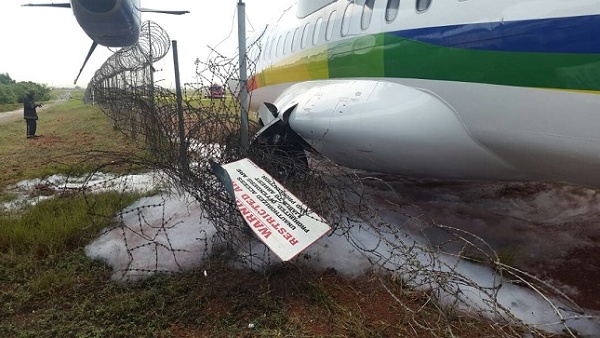
While Ghana’s airspace is considered one of the safest in the West African sub-region, the country has witnessed a number of aviation accidents over the years, some involving both military and civilian aircraft.
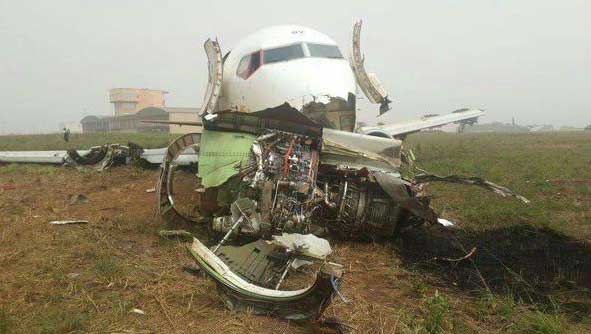
One of the deadliest in recent memory occurred on June 2, 2012, when Allied Air Flight 111, a Nigerian cargo plane, crash-landed at Kotoka International Airport, overshooting the runway and killing 12 people on the ground. Investigators later attributed the accident to pilot error and improper landing procedures.
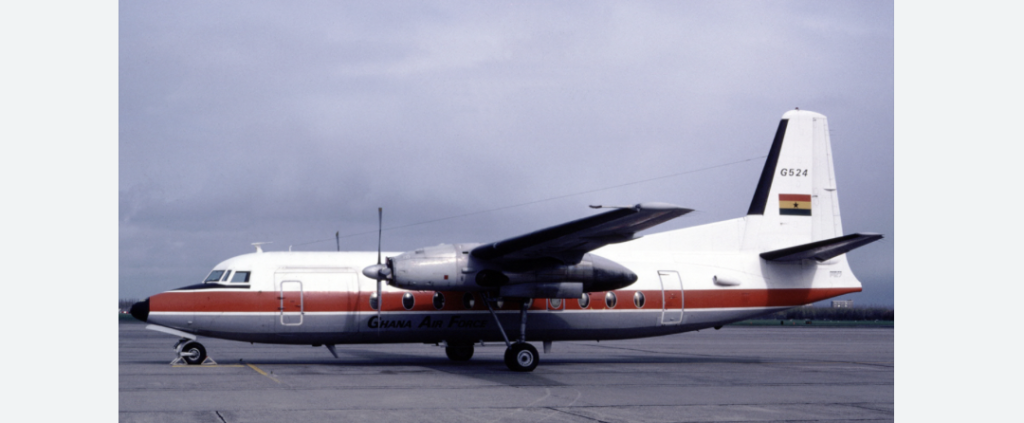
In 2000, a Fokker F27 Friendship 600 operated by the Ghana Air Force crashed about 13 kilometers from Accra, resulting in seven fatalities.
That incident followed an earlier tragedy in 1971, when a Ghana Air Force Avro 748-2A-254 aircraft crashed near the Ghana–Ivory Coast border, west of Takoradi, killing all four occupants.
Although Ghana’s commercial aviation sector has significantly improved due to enhanced oversight by the Ghana Civil Aviation Authority and international partnerships, isolated incidents, including military and chartered flights, highlight the need for constant vigilance.
In 2015, a Boeing 737-43Q aircraft had an incident at Kotoka International Airport, though fortunately, there were no fatalities.
National response and next steps
The deaths of key government figures in the recent crash have shocked the nation and the sub-region.
The Ghana Armed Forces and Ministry of Transport are expected to collaborate in a full-scale investigation into the circumstances surrounding the crash, with a view to enhancing operational safety standards.
The public, while mourning, has also renewed calls for greater transparency in the acquisition, maintenance, and operation of military and civilian aircraft.
GNA
07 Aug. 2025
Edited by Samuel Osei-Frempong