By Hafsa Obeng, GNA
Accra, Oct. 22, GNA – EcoPeriod, a Ghanaian reusable sanitary pad brand, has called on the Government to incorporate certified locally produced reusable sanitary pads into the Free Sanitary Pad Policy, arguing that the move could save the nation GH¢132.4 million.
Ms Amdiya Abdul Latiff, Founder and Chief Executive Officer of Eco-Me Africa, producers of EcoPeriod pads, said the GH¢292.4 million allocated to the policy could provide reusable sanitary pad kits to two million schoolgirls for three years, while leaving GH¢132.4 million available for investment in school sanitation infrastructure.
She made the appeal at the fifth Children Sanitation Festival and the grand finale of the seventh School Sanitation Solutions (Triple S) Challenge in Accra.
The event was organised by World Vision Ghana in collaboration with the Ministry of Local Government, Chieftaincy and Religious Affairs, the Ghana Education Service, the Zoomlion Foundation and other partners.
Ms Abdul Latiff explained that each EcoPeriod kit, which costs GH¢80, could last for at least three years, making it a more cost-effective option than disposable sanitary pads, which require regular replacement.
She urged the Government to include certified locally manufactured reusable pads in the Free Sanitary Pad Policy, saying the resulting savings could help address challenges such as inadequate toilet facilities and the absence of changing rooms for girls in schools.
“No monthly restocking, no burning pads for disposal, no allergies from synthetic gels,” she said.
Ms Abdul Latiff also called for the expedited registration of locally manufactured reusable sanitary pads by the Food and Drugs Authority (FDA) to facilitate their inclusion in the policy.
She noted that President John Dramani Mahama had directed local sourcing for the initiative and appealed to the relevant authorities to fast-track regulatory processes to enable Ghanaian manufacturers to participate in its implementation.
The Eco-Me Africa Chief Executive Officer further urged the Government to undertake a costed pilot programme with the company in communities with the greatest need to assess the effectiveness of the reusable-pad model.
Ms Abdul Latiff described menstrual hygiene as a critical component of school sanitation that required greater attention from policymakers and development partners.
She said more than 45 billion disposable menstrual products were used globally each year, with about 90 per cent containing plastic materials.
She said “a woman can use up to 11,000 disposable pads during her lifetime, with each taking up to 800 years to decompose.”
Citing data from UNICEF Ghana and the Environmental Protection Authority, she said if every menstruating woman in Ghana used just one disposable pad a day, more than 100 million pads could end up in landfills every month.
Ms Abdul Latiff said more than 500 million women and girls worldwide lacked access to affordable menstrual products, while about 95 per cent of girls in Ghana occasionally missed school due to menstruation-related challenges.
She said Eco-Me Africa manufactured reusable sanitary pads locally, while training and employing socially disadvantaged women and providing menstrual and reproductive health education to help tackle period poverty, menstrual waste and unemployment.
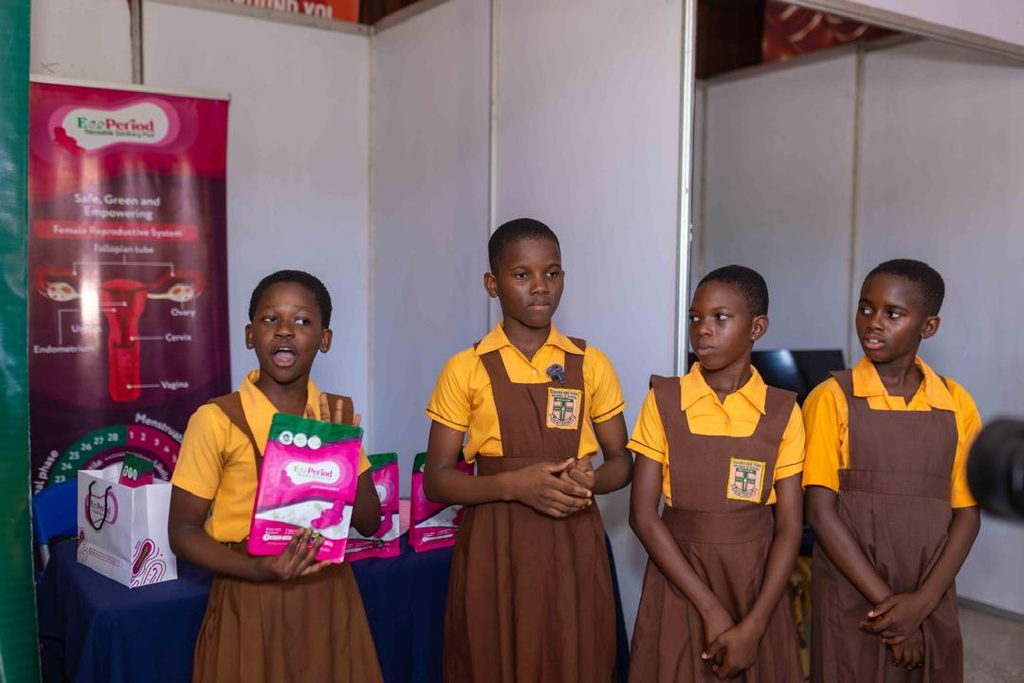
According to her, the products are made from absorbent and sustainable materials designed to be washable and quick-drying, offering girls and women a durable and reusable menstrual hygiene solution.
Ms Abdul Latiff called on government agencies, development partners and private-sector organisations to collaborate to improve menstrual hygiene management across the country.
“Sanitation conscience cannot stop at the toilet door,” she said.
Mr Joshua Baidoo, Interim National Director of World Vision Ghana, noted that some school toilet facilities lacked changing rooms for girls, making them less conducive for female students.
He said efforts to improve school sanitation must take into account the specific needs of girls, including access to facilities that support proper menstrual hygiene management.
The Triple S Challenge provides schoolchildren with a platform to develop practical solutions to sanitation challenges, with the 2026 edition focusing on promoting behaviour change among peers, families and communities.
Eco-Me Africa sponsored this year’s festival as part of efforts to encourage young people to become sanitation ambassadors in their schools and communities.
GNA
Edited by Lydia Kukua Asamoah
Reporter: Hafsa Obeng
[email protected]