Luanda, July 16, GNA – African central bank governors and financial sector leaders have reaffirmed their commitment to advancing financial inclusion and strengthening cybersecurity to support the continent’s long-term economic transformation.
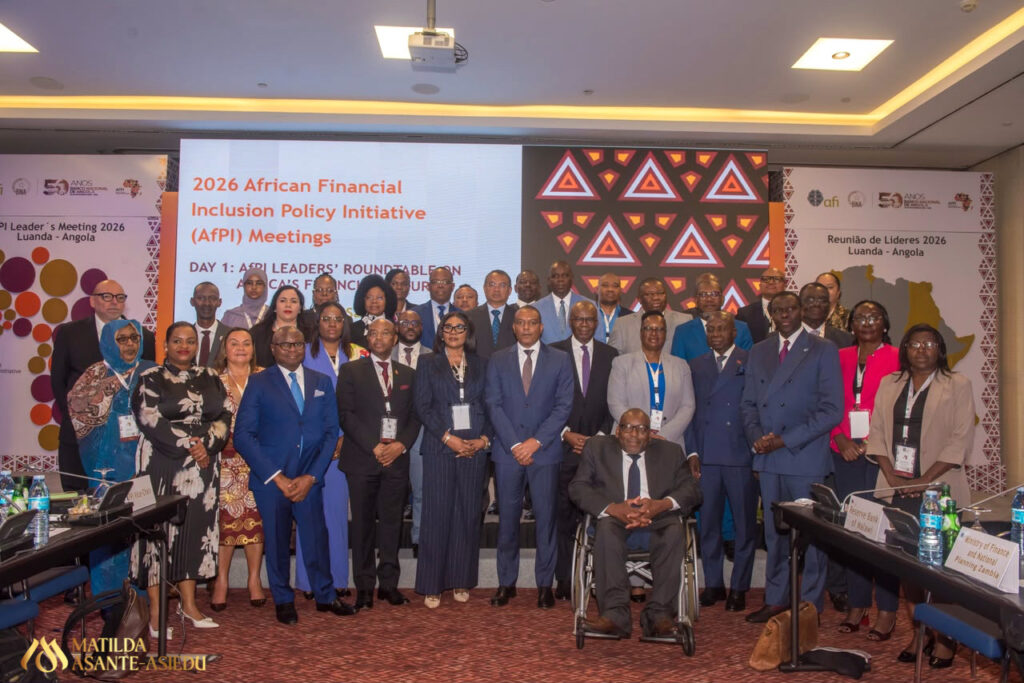
The commitment was expressed in the African Financial Inclusion Policy Initiative (AfPI) Leaders’ Communiqué, issued at the end of a two-day meeting in the Angolan capital of Luanda.
The meeting reviewed Africa’s instant payment landscape, regulatory frameworks supporting women-led micro, small and medium-sized enterprises, and cybersecurity initiatives.
These are aimed at translating policy commitments into practical benefits for citizens.
Mrs Matilda Asante-Asiedu, Chairperson of AfPI and Second Deputy Governor of the Bank of Ghana, noted that Africa had made significant progress in expanding access to financial services.
“It is no longer sufficient to measure success by the number of bank accounts opened, digital wallets activated or banking agents deployed,” she said.
“Our conversation must move from access to impact, from policy intent to measurable outcomes, and from isolated national progress to shared continental priorities.”
Mrs Asante-Asiedu said Africa must also ensure that the rapid expansion of digital financial services was matched by stronger cyber resilience.
“Cyber threats do not respect borders, institutional mandates or market segments,” she emphasised.
“Our response, therefore, must be collaborative, coordinated and forward-looking.”
She affirmed the Bank of Ghana’s commitment to supporting the initiative and working closely with member institutions to deepen financial inclusion and strengthen resilience across Africa.
The Luanda meeting follows the 2025 AfPI gathering in Accra, which was hosted by the Bank of Ghana.
That meeting led to the establishment of the AFI Africa Cybersecurity Centre to promote peer learning, information sharing and collaboration among member institutions.
Mr Manuel António Tiago Dias, Governor of Banco Nacional de Angola, said the real challenge was ensuring that financial inclusion produced tangible improvements in people’s lives.
He explained that inclusive financial systems should contribute to poverty reduction, increased productivity, expanded economic opportunities and greater resilience for households and businesses.
Dr Alfred Hannig, Chief Executive Officer of the Alliance for Financial Inclusion (AFI), said the next generation of financial inclusion should focus on empowerment.
Participation in the formal financial system must create opportunities for individuals, households, farmers, women, entrepreneurs, young people and other vulnerable groups, he stated.
The meeting, hosted by Banco Nacional de Angola, brought together more than 150 participants.
They included central bank governors, deputy governors, financial inclusion experts, development partners and policymakers from across Africa.
In line with AfPI’s rotational leadership arrangements, Mrs Asante-Asiedu handed over the chairmanship to Ms Felicia Dlamini-Kunene, Deputy Governor of the Central Bank of Eswatini.
GNA
Edited by Beatrice Asamani Savage