By Solomon Gumah, GNA.
Nalerigu (NE/R), March 25, GNA – Dr Godfred Kwabena Sarpong, the North East Regional Director of the Ghana Health Service, has expressed concern over the continuous refusal of medical officers to accept postings to the region.
He described the situation as a major threat to healthcare delivery and the attainment of Universal Health Coverage (UHC) and disclosed that out of 19 medical officers posted to the region in 2025, only three accepted their postings, leaving critical gaps in service delivery.
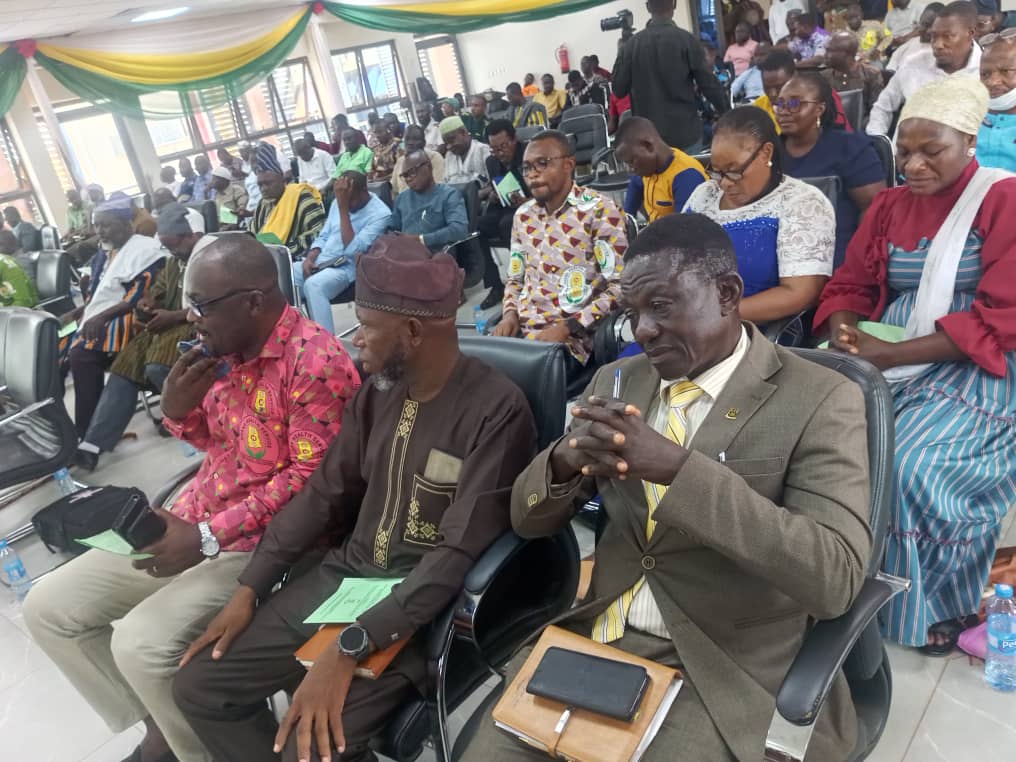
Dr Sarpong made this known during the 2025 Annual Performance Review Meeting and the maiden Maternal, Newborn, Child and Nutrition (MNCHN) Dialogue, held in Nalerigu.
The meeting, on the theme: “Advancing Universal Health Coverage through Innovation, Accountability and 24-Hour Quality Health Services: The Role of Stakeholders,” brought together health professionals, policymakers, traditional leaders, development partners and civil society organisations, to review performance and strategise for improved health outcomes.
The event was supported by the Korea International Cooperation Agency (KOICA) among other strategic partners.
Dr Sarpong noted that the doctor-to-population ratio, though improved from 1:38,279 in 2024 to 1:31,266 in 2025, remained far below the recommended target of 1:7,500.
He revealed that nearly 60 per cent of health staff were concentrated in only two districts, largely because of challenges in staff placement and reluctance to serve in deprived areas.
“This should not be our story and must not continue,” stressing that health workers must be deployed based on need, rather than influence.
Dr Sarpong identified inadequate infrastructure, lack of staff accommodation and logistical constraints, as key factors discouraging health professionals from accepting postings to the region.
He said several districts, including Mamprugu-Moaduri, Bunkpurugu-Nakpanduri, Chereponi and Yunyoo-Nasuan, lacked district hospitals, thereby limiting access to healthcare services.
Again, only one out of the six district health directorates had a standard office complex, while several health workers operated under poor conditions and lived in inadequate rented accommodation.
Dr Sarpong warned that failure to ensure equitable distribution of health personnel would undermine efforts to provide quality healthcare to underserved communities in the region.
Dr Abdulai Abukari, the Director for Special Duties at the Headquarters of the Ghana Health Service, who delivered the keynote address, said inequitable distribution of health workers continued to hamper service delivery, particularly in deprived districts where the need was greatest.
He underscored the need for government to expedite completion of ongoing health projects under the Agenda 111 initiative to address infrastructure gaps and improve working conditions.
He emphasised the need to strengthen primary healthcare through the Community-based Health Planning and Services (CHPS) strategy, to bring healthcare closer to communities.
Dr Abukari encouraged health professionals, especially indigenes, to accept postings to the region as part of their responsibility to support equitable healthcare delivery.
Mr Ibrahim Tia, the North East Regional Minister, said the government was committed to addressing workforce challenges through improved recruitment, deployment and retention strategies.
He said the government was implementing policies such as the Free Primary Health Care initiative and the Ghana Medical Trust Fund, to improve access to healthcare and strengthen service delivery.
Mr Tia added that the government would prioritise completion of stalled health projects, expansion of CHPS compounds and provision of modern medical equipment, to enhance healthcare delivery, especially in rural and underserved communities.
Stakeholders at the meeting called for stronger collaboration among government, development partners, traditional authorities and communities to address the challenges and improve healthcare delivery in the region.
GNA
Edited by Eric K. Amoh/ Christabel Addo